Ingredients
Method
- Make the scones:
- Preheat oven to 400 degrees Fahrenheit (204 degrees Celsius).
- Line a large baking sheet with parchment paper or a silicone baking mat, set aside.
- Finely dice the apples, then set them aside.
- Combine the flour, sugar, baking powder and sea salt in a large bowl.
- Grate the frozen butter into the dry mixture and stir to combine. (Or cut in cold butter with a pastry cutter or fork).
- Add half and half, egg and vanilla extract and stir until combined. The dough will look crumbly initially but will clump together when squeezed between your fingers.
- Stir in the diced apple and cinnamon chips.
- Turn dough out onto a lightly-floured surface and form it into a round disc that is about 8" in diameter.
- Cut into 8 equal pieces. Start by cutting the circle in half from top to bottom. Then cut it in half from side to side. Then cut the remaining pieces in half diagonally.
- Separate the apple scones and spread them out evenly on the prepared baking sheet.
- Lightly brush the tops of each scone with heavy cream.
- Bake in the preheated oven for 14-17 minutes, or until the scones look set and are lightly golden brown.
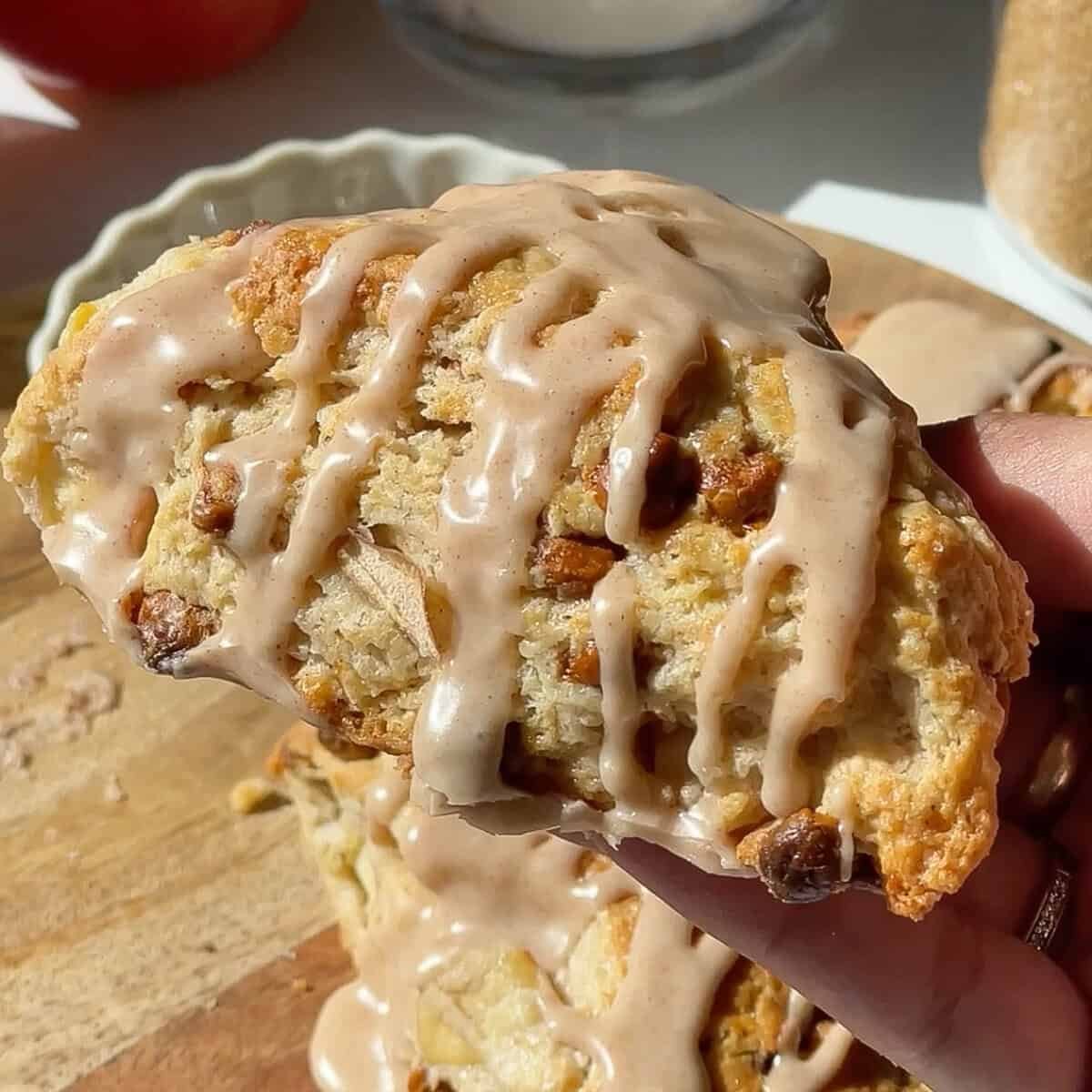
- Remove from the oven and transfer scones to cooling rack to cool completely before icing. Or you can skip the icing and serve warm.
- Make the Icing:
- Whisk the icing ingredients together in a small bowl.
- Drizzle or spread on top of cooled scones.
- Let harden at room temperature, then serve.
Notes
Nutrition facts are calculated with the glaze.
Glaze: Use the cinnamon glaze in this recipe, or vanilla glaze or maple glaze.
All-purpose flour: Use a 1:1 all-purpose gluten-free baking flour to make this recipe gluten-free.
Granulated sugar: Organic cane sugar or brown sugar (for a slightly different taste) work well.
Salted butter: Unsalted butter works well. Use frozen or cold butter to make these scones, so put a stick in the freezer or fridge well before making this recipe.
Half and half: Heavy cream and whole milk are both good substitutes for half and half. Alternatively, try making apple buttermilk scones.
Apples: Choose your favorite variety. Sweet/tart apples like Pink Lady or Honeycrisp are preferred.
Heavy cream: Brushing the tops with heavy cream gives them a golden shine.
Store/Freeze: Store leftover apple scones in an airtight container at room temperature for up to 2 days, in the fridge for 5 days, or in the freezer for up to 2 months.
Make Ahead: Prepare the dough the night before and wrap it in plastic wrap. In the morning, slice and bake.
Apple Preparation: Finely dice the apples into small, bite-sized pieces. Peeling the apples is optional.
Serving: Serve at room temperature or slightly warm, with cinnamon butter or apple butter if desired.
Nutrition information is automatically calculated and should only be used as an approximation.