
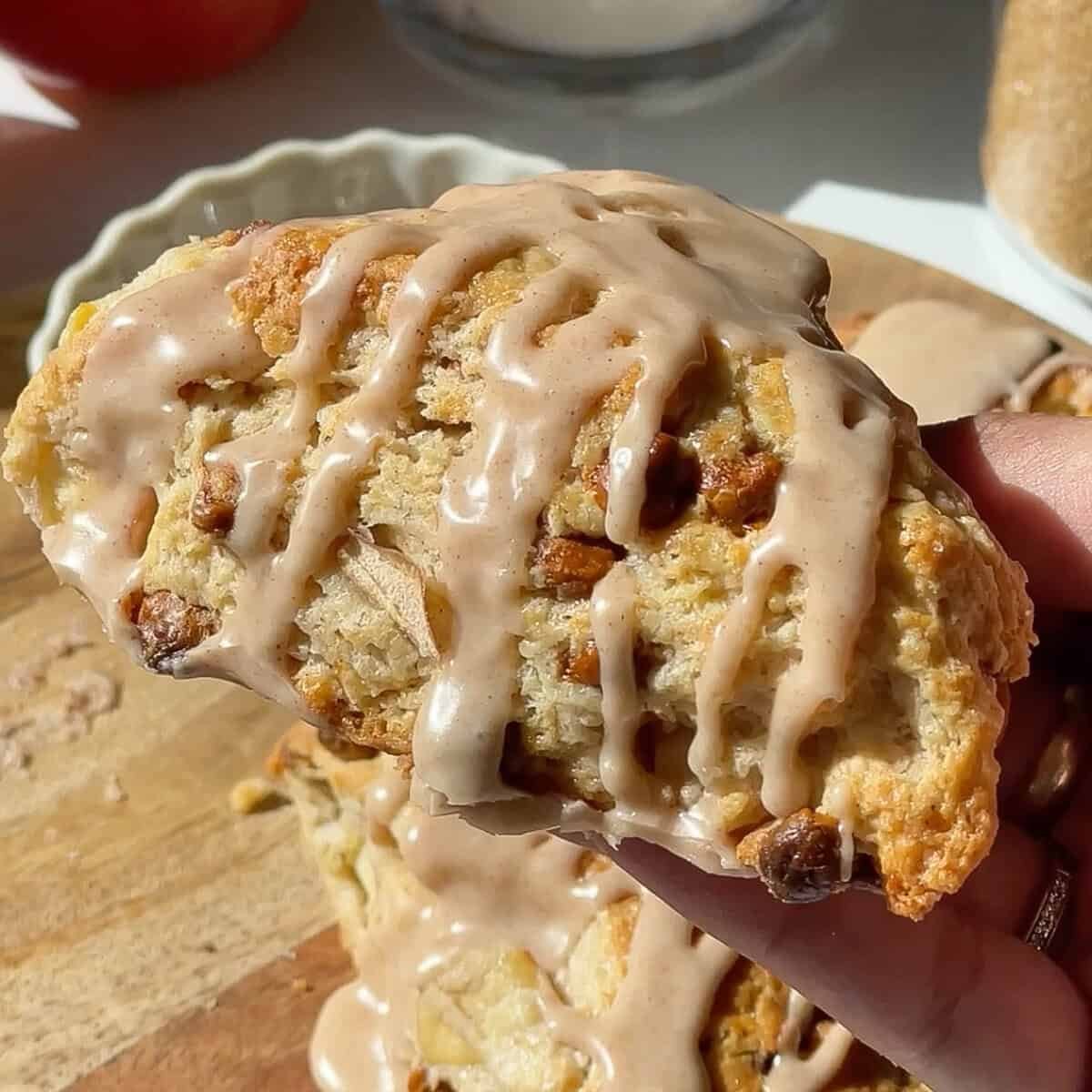
Easy Cinnamon Apple Scones for a Cozy Fall Breakfast
Ingredients
Method
- Make the scones:
- Preheat oven to 400 degrees Fahrenheit (204 degrees Celsius).
- Line a large baking sheet with parchment paper or a silicone baking mat, set aside.
- Finely dice the apples, then set them aside.
- Combine the flour, sugar, baking powder and sea salt in a large bowl.
- Grate the frozen butter into the dry mixture and stir to combine. (Or cut in cold butter with a pastry cutter or fork).
- Add half and half, egg and vanilla extract and stir until combined. The dough will look crumbly initially but will clump together when squeezed between your fingers.
- Stir in the diced apple and cinnamon chips.
- Turn dough out onto a lightly-floured surface and form it into a round disc that is about 8″ in diameter.
- Cut into 8 equal pieces. Start by cutting the circle in half from top to bottom. Then cut it in half from side to side. Then cut the remaining pieces in half diagonally.
- Separate the apple scones and spread them out evenly on the prepared baking sheet.
- Lightly brush the tops of each scone with heavy cream.
- Bake in the preheated oven for 14-17 minutes, or until the scones look set and are lightly golden brown.
- Remove from the oven and transfer scones to cooling rack to cool completely before icing. Or you can skip the icing and serve warm.
- Make the Icing:
- Whisk the icing ingredients together in a small bowl.
- Drizzle or spread on top of cooled scones.
- Let harden at room temperature, then serve.
Notes
Glaze: Use the cinnamon glaze in this recipe, or vanilla glaze or maple glaze.
All-purpose flour: Use a 1:1 all-purpose gluten-free baking flour to make this recipe gluten-free.
Granulated sugar: Organic cane sugar or brown sugar (for a slightly different taste) work well.
Salted butter: Unsalted butter works well. Use frozen or cold butter to make these scones, so put a stick in the freezer or fridge well before making this recipe.
Half and half: Heavy cream and whole milk are both good substitutes for half and half. Alternatively, try making apple buttermilk scones.
Apples: Choose your favorite variety. Sweet/tart apples like Pink Lady or Honeycrisp are preferred.
Heavy cream: Brushing the tops with heavy cream gives them a golden shine.
Store/Freeze: Store leftover apple scones in an airtight container at room temperature for up to 2 days, in the fridge for 5 days, or in the freezer for up to 2 months.
Make Ahead: Prepare the dough the night before and wrap it in plastic wrap. In the morning, slice and bake.
Apple Preparation: Finely dice the apples into small, bite-sized pieces. Peeling the apples is optional.
Serving: Serve at room temperature or slightly warm, with cinnamon butter or apple butter if desired.
Nutrition information is automatically calculated and should only be used as an approximation.
These cinnamon apple scones combine tender, buttery pastry with sweet-tart apple pieces, warm cinnamon, and pockets of cinnamon chips. Each scone has a lightly golden exterior and a soft, moist center, finished with a simple cinnamon icing that adds just the right amount of sweetness.
Made with frozen butter, fresh apples, and a handful of baking staples, this cinnamon apple scones recipe is a lovely choice for breakfast, weekend brunch, or an afternoon coffee break. The dough comes together without a mixer, and the scones bake in about 15 minutes.
Why You’ll Love These Cinnamon Apple Scones
- Tender centers with golden edges: Frozen butter helps create a delicate, buttery texture while the exterior develops a light golden finish.
- Fresh apples in every bite: Finely diced apples distribute throughout the dough, adding moisture and a pleasant fruity texture.
- Extra cinnamon flavor: Ground cinnamon and cinnamon chips give these homemade scones a warm, spiced taste.
- No special mixer required: A mixing bowl, grater, and spatula are enough to prepare the dough.
- Easy to prepare ahead: The dough can be shaped the evening before and baked the following morning.
- Optional cinnamon icing: Enjoy the scones warm without icing or let them cool before adding the sweet cinnamon glaze.
Ingredients You’ll Need
This apple scone recipe uses a combination of everyday baking ingredients and fresh fruit. A few ingredients are particularly important for achieving the right texture.
For the Apple Scones
- 2 cups all-purpose flour
- ¼ cup granulated sugar
- 1 tablespoon baking powder
- ½ teaspoon fine sea salt
- 1 teaspoon ground cinnamon
- ½ cup salted butter, frozen
- ½ cup half-and-half or heavy cream
- 1 large egg
- ½ teaspoon pure vanilla extract
- 1 medium apple, finely diced (about 1 heaping cup)
- ½ cup cinnamon chips
- 3 tablespoons heavy cream, for brushing
For the Cinnamon Icing
- 1 cup powdered sugar
- ½ teaspoon ground cinnamon
- ½ teaspoon pure vanilla extract
- 1 tablespoon whole milk
Choosing the Right Apples
Apples provide natural sweetness, moisture, and small bursts of fruit throughout the scones.
Honeycrisp and Pink Lady apples are particularly good choices because they offer a pleasant balance of sweetness and tartness. Their firm texture also makes them convenient to dice into small pieces.
You can leave the peel on for a little extra texture or remove it for a more uniform filling.
The important part is cutting the apple finely. Large chunks can make the dough harder to shape evenly and may leave some sections noticeably wetter than others.
Why Frozen Butter Makes a Difference
Cold butter is one of the most important ingredients in tender scones.
When butter remains in small, solid pieces throughout the dough, it melts during baking and releases steam. This helps create a lighter texture rather than a dense, uniform crumb.
Grating frozen butter makes it easier to distribute throughout the flour without excessive mixing.
If frozen butter is unavailable, thoroughly chilled butter can be worked into the flour using a pastry cutter or fork.
What Do Cinnamon Chips Add?
Cinnamon chips provide concentrated pockets of sweetness and cinnamon flavor.
Unlike ground cinnamon, which disperses evenly through the flour, cinnamon chips remain in small pieces throughout the scones.
They complement the fresh apples and reinforce the cinnamon flavor without requiring more ground spice.
How to Make Cinnamon Apple Scones
These homemade apple scones come together in a few straightforward stages. The most important techniques are keeping the butter cold, handling the dough gently, and allowing the baked scones to cool before icing.
Step 1: Prepare the Oven and Apples
Preheat your oven to 400°F (204°C).
Line a large baking sheet with parchment paper or a silicone baking mat.
Finely dice one medium apple into small pieces, measuring approximately one heaping cup.
Set the apple aside while preparing the dough.
Keeping the pieces relatively uniform will help distribute them throughout the scones.
Step 2: Mix the Dry Ingredients
In a large mixing bowl, combine the all-purpose flour, granulated sugar, baking powder, fine sea salt, and ground cinnamon.
Stir until the mixture looks evenly blended.
Distributing the baking powder thoroughly helps the scones rise more consistently, while mixing the cinnamon into the flour prevents concentrated pockets of spice.
Step 3: Add the Frozen Butter
Remove the butter from the freezer and grate it directly into the flour mixture.
Stir gently to coat the butter shreds with the dry ingredients.
You should still see small pieces of butter throughout the mixture.
Avoid rubbing the butter completely into the flour or working the mixture so long that the butter softens significantly.
The goal is to keep small, cold pieces of butter in the dough.
Step 4: Add the Wet Ingredients
Add the half-and-half, egg, and vanilla extract to the bowl.
Stir gently until the mixture begins to form a dough.
At first, it may look dry and crumbly. This is normal.
When pressed between your fingers, the mixture should begin to hold together.
Avoid adding extra liquid immediately just because the dough looks less smooth than cake or muffin batter. Scone dough is supposed to be fairly thick and somewhat crumbly.
Step 5: Fold in the Apples and Cinnamon Chips
Add the finely diced apple and cinnamon chips.
Gently fold them into the dough until distributed throughout.
Try not to overmix at this stage.
Excessive mixing can encourage gluten development, which may make the finished scones tougher instead of tender.
Step 6: Shape and Cut the Dough
Transfer the dough onto a lightly floured work surface.
Bring it together gently and shape it into a round disc approximately 8 inches in diameter.
Cut the disc into eight equal wedges.
An easy approach is to cut the circle into quarters, then divide each quarter in half.
Use a sharp knife and make clean cuts rather than repeatedly pressing or dragging through the dough.
The wedges should hold together while retaining a slightly rustic appearance.
Step 7: Brush and Bake
Arrange the eight wedges on the prepared baking sheet, leaving space between them.
Lightly brush the tops with the 3 tablespoons of heavy cream.
This helps the surfaces develop an attractive golden finish.
Bake at 400°F (204°C) for 14–17 minutes.
The scones are ready when they appear set and have lightly golden tops.
Remove them from the oven and transfer them to a wire cooling rack.
Step 8: Prepare the Cinnamon Icing
While the scones cool, prepare the icing.
In a small bowl, whisk together:
- 1 cup powdered sugar
- ½ teaspoon cinnamon
- ½ teaspoon vanilla extract
- 1 tablespoon whole milk
Whisk until the mixture is smooth and the cinnamon is evenly distributed.
The icing should be suitable for drizzling or spreading over the cooled scones.
Step 9: Ice and Serve
Allow the baked scones to cool completely before adding the cinnamon icing.
Drizzle or spread the icing over each scone.
Leave them at room temperature until the icing sets.
For an alternative serving option, skip the icing and enjoy the scones slightly warm.
Tips for Tender, Buttery Apple Scones
Keep the Butter as Cold as Possible
Warm butter blends too completely into the dough and can affect the texture of the finished scones.
Use frozen butter when possible, and avoid lengthy mixing after adding it.
If the dough becomes noticeably warm or sticky while shaping, a short rest in the refrigerator can help firm the butter before baking.
Dice the Apples Finely
Large apple chunks can create uneven pockets of moisture and make the wedges difficult to cut neatly.
Small, evenly sized pieces are easier to distribute and help keep the dough cohesive.
Don’t Overwork the Dough
Scone dough does not need to be kneaded until completely smooth.
Mix it only until the ingredients come together and the dough holds its shape.
A slightly rough surface is preferable to a heavily worked dough.
Measure Flour Carefully
Too much flour can leave the scones dry and crumbly.
For more consistent results, lightly spoon flour into the measuring cup and level it off rather than packing it firmly.
Bake Until Just Set
The scones should have lightly golden surfaces and look set when removed from the oven.
Avoid leaving them in the oven simply to achieve a deeply browned exterior, as unnecessary extra baking can dry the centers.
Cool Before Glazing
Warm scones can cause the cinnamon icing to melt and run off.
Waiting until they are completely cool helps create a more defined icing layer.
Common Mistakes to Avoid
Using Soft Butter
Butter that has softened too much may blend into the flour instead of remaining in small pieces.
What to do instead: Use frozen or very cold butter, and work quickly when mixing and shaping.
Adding Too Much Liquid
The dough may initially look crumbly, which can tempt you to pour in more cream.
However, the recipe is designed to come together when the mixture is gently pressed.
What to do instead: Check whether the dough holds together before making any adjustments.
Overmixing After Adding the Flour
Excessive mixing develops gluten and can make scones dense or chewy.
What to do instead: Stir just until the dough comes together, then use a light touch when shaping.
Cutting Oversized Apple Pieces
Large chunks make it harder to distribute fruit evenly and can interfere with cleanly shaped wedges.
What to do instead: Use small, bite-sized apple pieces and fold them through the dough gently.
Icing the Scones While Hot
Adding the icing too early can cause it to become thin and disappear into the warm surface.
What to do instead: Cool the scones completely if you want a visible cinnamon glaze.
Easy Ingredient Substitutions
A few ingredients can be adjusted depending on what you have available.
| Original Ingredient | Alternative | What to Expect |
|---|---|---|
| All-purpose flour | 1:1 gluten-free baking flour | Results may vary depending on the blend |
| Granulated sugar | Organic cane sugar | Similar sweetness and function |
| Granulated sugar | Brown sugar | A slightly deeper, caramel-like flavor |
| Salted butter | Unsalted butter | Less added salt from the butter |
| Half-and-half | Heavy cream | A richer dough |
| Half-and-half | Whole milk | A somewhat lighter dough |
| Honeycrisp or Pink Lady apple | Another firm apple variety | Sweetness and tartness may vary |
| Cinnamon icing | Vanilla or maple icing | A different finishing flavor |
When using gluten-free flour, choose a blend labeled for 1:1 replacement in baking. The texture may still differ from the wheat-flour version.
Delicious Variations to Try
Apple Scones With Vanilla Glaze
Replace the cinnamon icing with a simple vanilla glaze for a milder finish that lets the apple flavor stand out.
Maple-Glazed Apple Scones
A maple glaze complements the cinnamon and apples with a deeper sweetness.
This makes a particularly appealing variation for autumn breakfasts and brunches.
Apple Scones Without Icing
For a less sweet finish, omit the icing entirely.
The dough already contains granulated sugar and cinnamon chips, so the scones can be enjoyed on their own.
Apple Cinnamon Scones With Brown Sugar
Replace the granulated sugar with brown sugar for a subtle caramel-like flavor.
Keep in mind that brown sugar contains more moisture, so the dough and finished texture may be slightly different.
What to Serve With Cinnamon Apple Scones
Apple cinnamon scones pair naturally with warm drinks, creamy spreads, and simple breakfast foods.
A few serving ideas include:
- Coffee or espresso: The slightly bitter flavor balances the sweet cinnamon icing.
- Black tea or chai: Warm spices work particularly well with apples and cinnamon.
- Apple butter: Adds concentrated apple flavor without changing the scone itself.
- Cinnamon butter: Provides a creamy, spiced topping for unglazed scones.
- Fresh fruit: A bowl of berries or sliced fruit adds a refreshing contrast.
- Greek yogurt: A simple way to add a creamy, tangy element to breakfast.
For a larger brunch spread, serve the scones alongside an egg casserole, fresh fruit, and coffee.
How to Store Cinnamon Apple Scones
To maintain their texture and freshness, allow the baked scones to cool before transferring them to a container.
At Room Temperature
Store the scones in an airtight container at room temperature for up to 2 days.
Keep the container in a cool, dry location away from direct sunlight.
In the Refrigerator
Refrigerate leftover scones in an airtight container for up to 5 days.
Refrigeration can make baked goods firmer, so allowing the scones to return toward room temperature before serving may improve their texture.
In the Freezer
Freeze the baked scones for up to 2 months.
For convenient portions, arrange them individually and place them in a freezer-safe container or bag.
Freezing before adding icing is helpful if you want to glaze them fresh after thawing.
How to Reheat Apple Scones
Apple scones can be served at room temperature or gently warmed.
Oven Method
Place an unglazed scone on a baking sheet and warm it in a low oven until heated through.
Avoid excessive heating, which can dry out the center.
Microwave Method
For a quicker option, warm an individual scone briefly in the microwave.
Use short intervals and check frequently to avoid overheating.
Microwaving may soften the exterior, so it is better for a tender result than for restoring crisp edges.
Tip: If your scones are already glazed, warming may cause the icing to soften or melt. Unglazed scones are better suited to reheating.
Can You Make Apple Scones Ahead of Time?
Yes. The dough can be prepared the night before baking.
Prepare and shape the dough, then wrap it securely in plastic wrap and refrigerate overnight.
The following morning, cut the dough into wedges if you have not already done so, arrange the scones on a lined baking sheet, brush with cream, and bake according to the recipe.
Keeping the dough cold before baking also helps preserve the small pieces of butter.
For the freshest icing finish, prepare the cinnamon glaze after the baked scones have cooled.
Frequently Asked Questions
What are the best apples for cinnamon apple scones?
Honeycrisp and Pink Lady apples are excellent choices because they offer a good balance of sweetness, tartness, and firmness. Other firm apple varieties can also work, although the finished flavor may vary.
Do I need to peel the apples?
No. Peeling is optional. Leaving the skin on adds a little texture, while peeling produces a more uniform apple filling. Either approach works as long as the apple is finely diced.
Why is my scone dough crumbly?
Scone dough is naturally firmer and more crumbly than cake batter. It should hold together when gently squeezed. Avoid adding extra liquid before checking whether the dough can be pressed into a disc.
Can I use heavy cream instead of half-and-half?
Yes. Heavy cream is an alternative to half-and-half in this recipe. It produces a richer dough because it contains more fat.
Can I make these apple scones gluten-free?
You can try replacing the all-purpose flour with a 1:1 gluten-free baking flour blend. Choose a blend formulated for baking, and be aware that the finished texture may differ.
How do I keep my homemade scones from becoming dry?
Use properly measured flour, keep the butter cold, avoid overmixing, and bake only until the scones are set and lightly golden. Excess flour, prolonged mixing, and overbaking can all contribute to a dry texture.
Can I freeze cinnamon apple scones?
Yes. The baked scones can be frozen in freezer-safe packaging for up to 2 months. For the best icing appearance, consider freezing them without glaze and adding it after thawing.
Can I make the cinnamon icing ahead of time?
Yes, you can prepare it in advance and keep it covered in the refrigerator. Stir it before using. If it has thickened too much, add a very small amount of milk until it returns to a drizzleable consistency.
Do cinnamon apple scones need to be served warm?
No. These scones can be enjoyed at room temperature or slightly warm. If you prefer them warm, serving them without icing is the simplest option.