
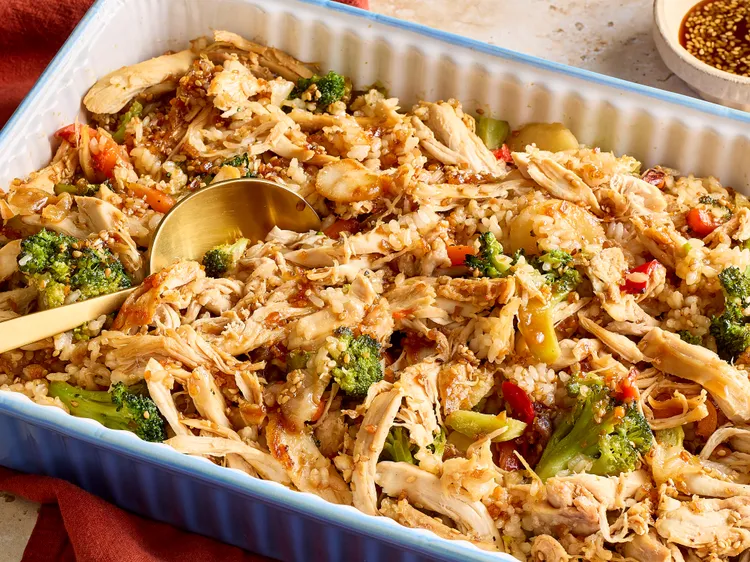
One-Pot Teriyaki Chicken Casserole
This teriyaki chicken casserole is a tasty dish packed with rice, flavorful chicken, and crisp, tender stir-fry vegetables. Everything, including the rice, bakes together in one dish, making it a foolproof recipe for an easy weeknight dinner.
Ingredients
Method
- Preheat the oven to 350 degrees F (176 degrees C). Lightly grease a 9×13-inch (3-quart) baking dish with cooking spray.
- Add the rinsed and drained rice to the baking dish. Carefully pour the boiling water over it, then seal the dish tightly with foil.
- Bake for 20 minutes, until the rice is tender and has absorbed the water.
- Take the dish out of the oven. Leave it covered for 5 minutes, then remove the foil and fluff the rice using a fork.
- Add the chicken, prepared vegetables, and teriyaki sauce to the rice, stirring until everything is combined.
- Return the uncovered dish to the oven and bake for approximately 15 minutes, until heated through.
- Finish with sliced green onions and sesame seeds. Offer extra teriyaki sauce and Sriracha when serving, if desired.
Notes
The recipe makes 12 servings.
Use uncooked sushi rice or short grain white rice, rinsed and drained before baking.
The frozen stir fry vegetables should be cooked according to their package directions before adding them to the casserole.
Use cooked chicken cut into bite-sized pieces.
Cover the baking dish tightly with foil during the initial rice cooking stage.
Allow the rice to stand covered for 5 minutes before fluffing and adding the remaining ingredients.
Bake the assembled casserole uncovered until heated through.
Garnish with sliced green onions and sesame seeds.
Additional teriyaki sauce, Sriracha sauce, and soy sauce may be served alongside the casserole.
The source lists a total time of 45 minutes, with a separate 5-minute standing time.
No separate recipe notes were provided on the recipe webpage.
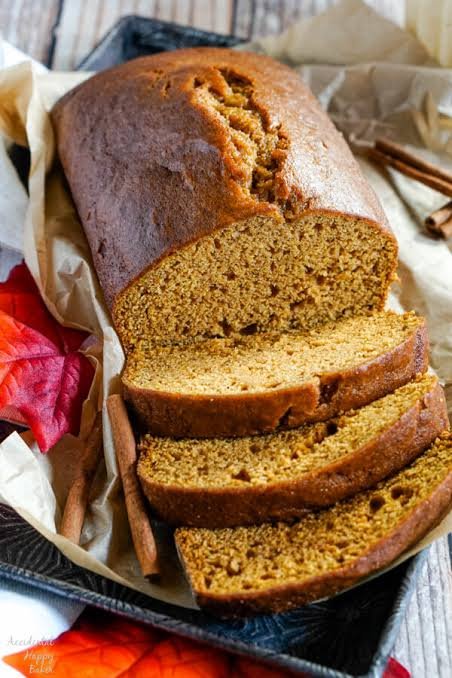
Downeast Maine Pumpkin Bread
This pumpkin bread is a great old Maine recipe, moist and full of warm spices. The bread actually tastes even better the day after it is baked. It’s easy to make with canned pumpkin and perfect for holiday gift-giving!
Ingredients
Method
- Gather the ingredients. Preheat the oven to 350 degrees F (175 degrees C). Grease and flour two 9×5-inch loaf pans.
- In a large bowl, combine flour, baking soda, salt, cinnamon, nutmeg, cloves, and ginger using a whisk.
- In another large bowl, whisk together pumpkin puree, eggs, vegetable oil, water, and sugar until the mixture is smooth.
- Gently incorporate the dry ingredients into the pumpkin mixture, stopping once no dry flour remains. Avoid overmixing.
- Distribute the batter equally between the two prepared loaf pans.
- Bake for approximately 50 minutes, until a toothpick inserted in the middle of each loaf comes out clean or with a few moist crumbs.
- Leave the loaves in their pans for 10 minutes. Loosen the edges with a thin knife, transfer to a wire rack, and let cool completely before slicing or wrapping.
Notes
Optional Add-Ins: Fold 1 cup semisweet chocolate chips or chopped toasted pecans into the batter before baking, or use ½ cup of each.
Homemade Pumpkin Puree: Drain away excess moisture before measuring 1¾ cups of homemade pumpkin puree.
Mixing Tip: Stir the dry ingredients into the pumpkin mixture just until no dry streaks remain to prevent a tough or dense texture.
Flour Measuring Tip: Spoon flour into the measuring cup and level the top rather than scooping directly from the bag.
Make Ahead: The pumpkin bread develops more flavor by the following day and can be baked a day or two ahead.
Room Temperature Storage: Let the loaves cool completely, wrap tightly, and keep at room temperature for up to 4 days.
Refrigeration: Store tightly wrapped pumpkin bread in the refrigerator for up to 1 week.
Freezing: Allow the bread to cool completely, then wrap the whole loaves or individual slices securely and freeze for up to 3 months.
Thawing: Let frozen pumpkin bread thaw at room temperature while still wrapped.
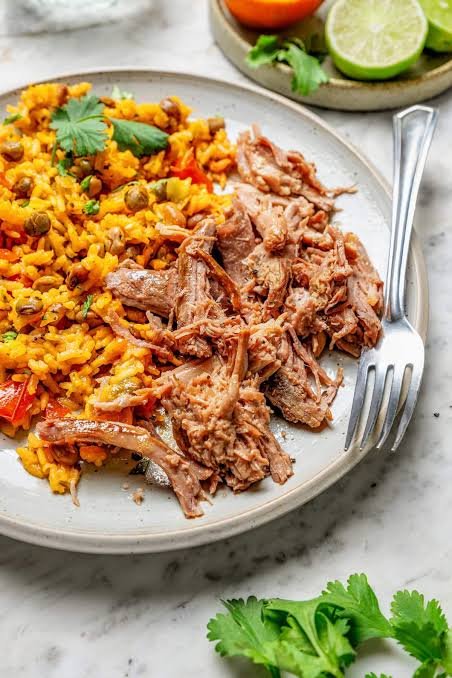
Slow Cooker Pernil Pork
Puerto Rican style pork roast, but done in the slow cooker. It’s so tender and flavorful. Best of all, it’s so easy to make!
Ingredients
Method
- Blend the garlic, onion, oregano, cumin, ancho chile pepper, salt, and black pepper together. Gradually add the vinegar and enough olive oil to form a paste, scraping down the blender sides as needed. Coat the pork loin thoroughly with the seasoning paste and place it in the slow cooker.
- Cook on Low for 6 to 8 hours, until the pork is tender enough to pull apart with a fork. Cut the cooked pork into chunks or shred it, then serve garnished with lime wedges.
Notes
The recipe yields 6 servings from one 3-pound boneless pork loin roast.
Blend the garlic, onion, oregano, cumin, ancho chile pepper, salt, black pepper, vinegar, and olive oil into a paste before coating the pork.
Use only enough olive oil to achieve a paste-like consistency, as directed in the recipe.
The pork is cooked on the slow cooker’s Low setting.
The instructions specify cooking until fork-tender, which may take 6 to 8 hours.
The cooked pork can be cut into chunks or shredded before serving.
Serve with lime wedges as specified in the original recipe.
The recipe card lists a cook time of 6 hours, while the cooking instructions allow 6 to 8 hours.
No separate recipe notes were provided in the recipe card.
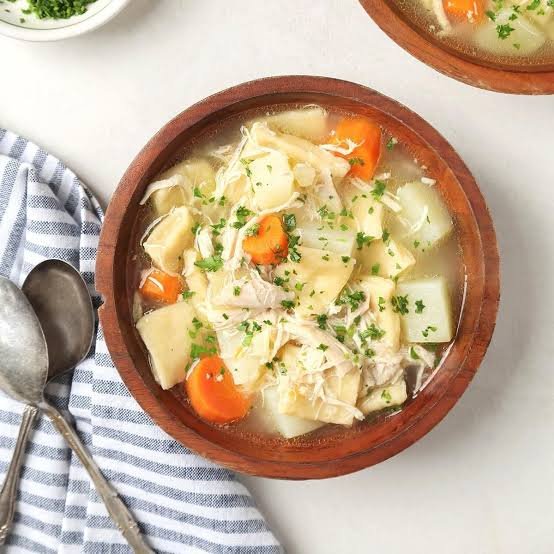
Pennsylvania Dutch Chicken Soup
This easy Pennsylvania Dutch chicken soup uses rotisserie chicken, corn, chopped eggs, and homemade dumpling-like rivels, all cooked in a savory broth and ready in under an hour. Chicken and dumplings meets corn chowder in this cozy pot of comfort.
Ingredients
Method
- Heat butter in a Dutch oven over medium-high heat. Add celery and onion and cook for 1 minute. Season with salt, pepper, and poultry seasoning. Cook until vegetables are tender, about 3 minutes longer.
- Stir in stock and corn and bring to a boil. Add chicken and simmer for 10 minutes.
- Meanwhile, prepare the rivels by stirring together eggs, flour, and remaining salt in a bowl until well combined. Add 1 to 2 tablespoons of milk or broth if needed to bring the dough together.
- Drop dime-sized balls of dough into the simmering soup and increase the heat if necessary to maintain a strong simmer. Add hard boiled eggs and continue to cook, stirring occasionally, until rivels are tender and cooked, about 15 minutes.
- Stir in parsley and adjust seasoning with salt and pepper if desired.
Notes
The recipe uses shredded rotisserie chicken, corn, and chicken stock as the soup base.
Use finely chopped celery and onion, and cook until the vegetables become tender.
The rivels are prepared by combining beaten eggs, flour, and the remaining salt.
Add 1 to 2 tablespoons of milk or broth if necessary to bring the rivel dough together.
Form the dough into dime-sized balls before dropping them into the simmering soup.
Maintain a strong simmer while cooking the rivels for approximately 15 minutes, until tender and cooked.
Add chopped hard-boiled eggs while the rivels cook.
Finish with fresh parsley and adjust the salt and pepper to taste.
No separate recipe notes were provided in the recipe card.

Authentic German Potato Salad
This warm German potato salad features tender potatoes tossed in a flavorful and tangy bacon vinaigrette. Pairs perfectly with grilled sausages or schnitzel and is always a crowd-pleaser at potlucks.
Ingredients
Method
- Gather the ingredients.
- Place the diced potatoes in a large pot and cover them with water by 1 to 2 inches. Bring to a boil and cook for about 10 minutes, until easily pierced with a fork. Drain and leave to cool.
- While the potatoes cook, fry the bacon in a large, deep skillet over medium-high heat for 10 to 12 minutes, turning as needed, until crisp and browned. Transfer to a paper towel-lined plate. Once cool enough to handle, crumble the bacon and retain the grease in the skillet.
- Add the diced onion to the bacon grease and cook over medium heat for 6 to 8 minutes, until browned. Stir in the vinegar, sugar, water, salt, and black pepper, then bring the mixture to a boil.
- Add the potatoes and half of the crumbled bacon to the boiling mixture. Cook for 3 to 4 minutes, until warmed through.
- Transfer the warm potato salad to a serving dish. Sprinkle with the remaining bacon, garnish with chopped parsley, and serve warm.
Notes
Editor’s Note: The original recipe used 3 tablespoons of sugar, but the updated recipe recommends starting with 1 ½ tablespoons and increasing according to taste.
Potato Selection: Waxy potatoes, such as new potatoes, are recommended because they hold their shape well. Yukon Gold potatoes are another suitable option.
Serving Temperature: This German potato salad is generally served warm, although it can also be served at room temperature.
Serving Suggestions: Pair with grilled sausages or schnitzel, or serve as a side dish at potlucks and picnics.
Storage: Store leftover German potato salad in a shallow, airtight container for up to 5 days.
Reheating: Reheat gently in the oven, covered with aluminum foil, to help prevent the potatoes from drying out.
Freezing: Allow the potato salad to cool completely before freezing. Freeze for up to 3 months.
Thawing: Thaw frozen potato salad in the refrigerator, then reheat in the oven.
The recipe uses a vinegar-based bacon dressing rather than a mayonnaise-based dressing.