
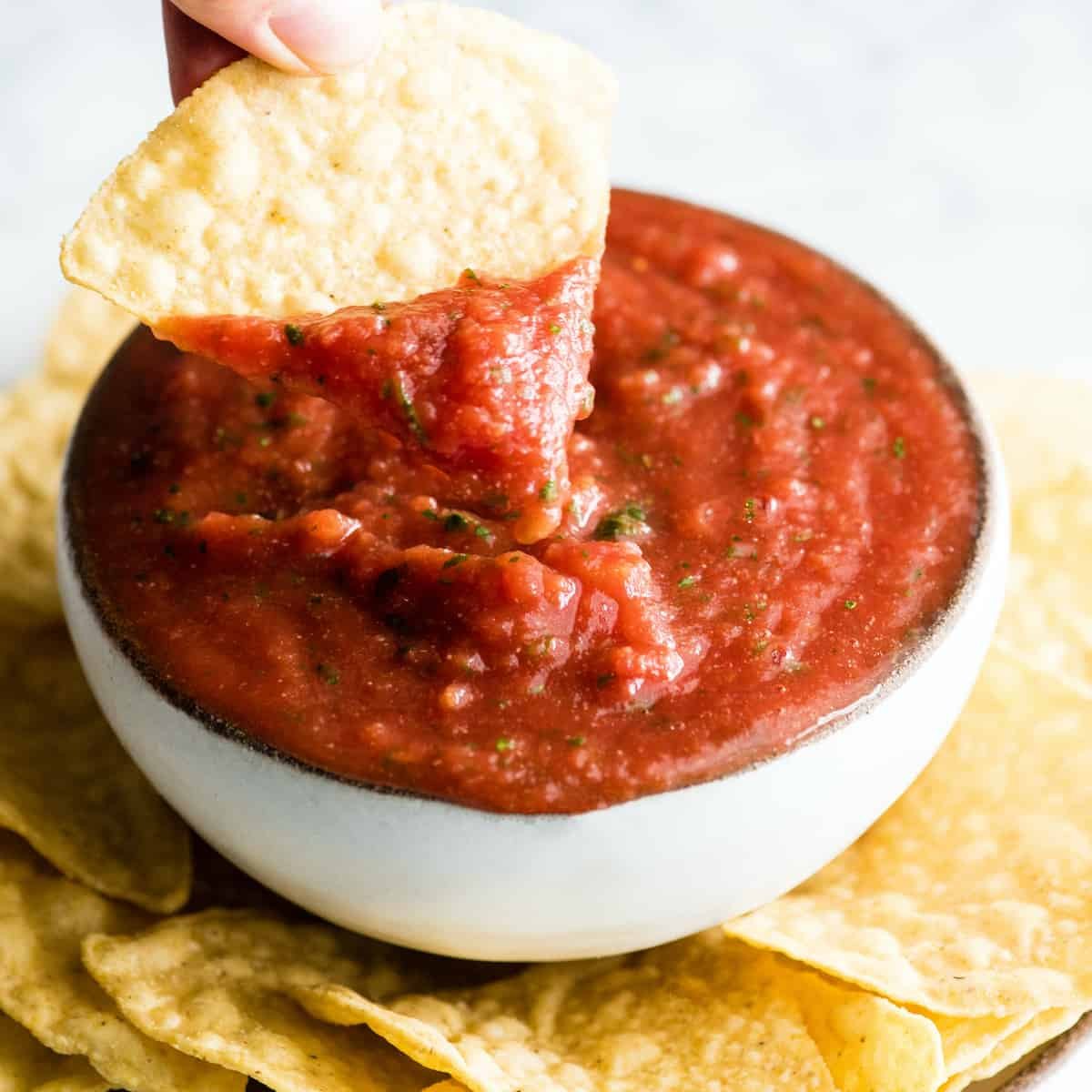
Easy Homemade Salsa Recipe with Fresh Tomatoes
Ingredients
Method
- Put onion, cilantro, garlic, cumin, sea salt, sugar and lime juice into the container of a Vitamix blender.
- Pulse to combine until the onion are diced well.
- Add 1 can of diced tomatoes and blend for 5-10 seconds.
- Add second can, pulse to lightly blend (if desired), or leave them chunky.
- Chill for at least 30 minutes (optional but recommended for flavors to blend together).
- Pour into a serving dish and enjoy!
Notes
Onion: Onion powder works as a substitute, but fresh onion is preferred.
Fresh Cilantro: The recipe does not recommend a direct substitute for fresh cilantro. It can be omitted, but the flavor will change.
Minced Garlic: Substitute 1 teaspoon garlic powder if desired.
Ground Cumin: Ground cumin is an essential spice for this salsa.
Granulated Sugar: Sugar is optional but enhances the tomato flavor. Brown sugar, coconut sugar, or honey may be used instead.
Lime Juice: Both fresh and bottled lime juice work well.
Spicy Salsa: Add cayenne pepper, chili pepper, jalapeño, habanero, 1-2 Tablespoons of hot sauce, or hot green chilies for additional heat.
Chunky Salsa: Pulse the tomatoes 1-2 times instead of blending thoroughly for a chunkier consistency.
Fire-Roasted Salsa: Use fire-roasted canned tomatoes for a deeper flavor.
Green Tomato Salsa: Green tomatoes can be used as a variation.
Chile Salsa: Add a can of diced green chiles.
Chilling: Refrigerate the salsa for at least 30 minutes to allow the flavors to blend. Chilling is optional.
Thicker Salsa: Drain the liquid from the tomatoes before blending to produce a thicker consistency.
Serving: Serve with tortilla chips, tacos, nachos, burritos, enchiladas, or other Mexican-style dishes.
Storage: Store leftover salsa in an airtight container in the refrigerator for up to 5 days.
Freezing: Freezing this salsa is not recommended.
Nutrition: Each 0.25 cup serving contains approximately 20 calories, 5 g carbohydrates, 1 g protein, 1 g fat, 1 g saturated fat, 235 mg sodium, 168 mg potassium, 1 g fiber, 3 g sugar, 150 IU vitamin A, 9 mg vitamin C, 25 mg calcium, and 1 mg iron.
Nutrition information is automatically calculated and should only be used as an approximation.
This easy homemade salsa recipe brings together juicy tomatoes, fresh cilantro, onion, garlic, lime juice, and warm cumin for a fresh-tasting, restaurant-style dip. Everything comes together in a blender in just 5 minutes, with no cooking or extensive chopping required.
Using canned diced tomatoes makes this salsa especially convenient because you can prepare it with ingredients you may already have in your pantry. Keep it slightly chunky for scooping with tortilla chips, or blend it a little longer for a smoother consistency. It’s also a versatile topping for tacos, burritos, nachos, and other Mexican-inspired meals.
Why You’ll Love This Homemade Salsa
- Ready in 5 minutes: Simply blend the ingredients together without cooking or lengthy preparation.
- Made with canned tomatoes: No peeling, coring, or chopping large quantities of fresh tomatoes.
- Restaurant-style texture: Adjust the blending time to make your salsa smooth, chunky, or somewhere in between.
- Fresh, balanced flavor: Cilantro and lime brighten the tomatoes, while garlic, onion, and cumin add savory depth.
- Easy to customize: Add jalapeños for heat, use fire-roasted tomatoes for a smoky flavor, or drain the tomatoes for a thicker dip.
- Versatile for serving: Enjoy it with tortilla chips or use it as a topping for tacos, burritos, nachos, and enchiladas.
Ingredients You’ll Need
This blender salsa uses a short list of everyday ingredients. The combination of canned tomatoes, aromatics, lime juice, and seasoning creates a balanced tomato salsa without requiring stovetop cooking.
Ingredients
- 28 ounces canned diced tomatoes
- ¼ cup onion, or ½ teaspoon onion powder
- ½ cup fresh cilantro
- 1 tablespoon minced garlic, or 1 teaspoon garlic powder
- ½ teaspoon ground cumin
- ½ teaspoon fine sea salt
- 1 teaspoon granulated sugar, or honey
- 2 tablespoons lime juice
What Each Ingredient Adds
Canned diced tomatoes: These form the base of the salsa and provide a consistent tomato flavor. Regular diced tomatoes work well, while fire-roasted tomatoes give the salsa a deeper, slightly smoky taste.
Onion: Fresh onion adds a sharper, more aromatic flavor. Because the blender processes it into small pieces, extensive chopping isn’t necessary.
Fresh cilantro: Cilantro adds the fresh herbal flavor often associated with restaurant-style tomato salsa. Its distinctive taste is difficult to replace with another herb without changing the overall flavor.
Garlic: Minced garlic contributes a savory, slightly pungent note that complements the tomatoes and lime.
Ground cumin: Cumin provides subtle earthiness and warmth. A small amount goes a long way, so measure it carefully.
Fine sea salt: Salt enhances the tomato flavor and helps balance the acidity of the lime juice.
Granulated sugar: A small amount helps balance tartness and makes the tomato flavor taste more rounded. It can be omitted if the tomatoes are naturally sweet enough.
Lime juice: Adds brightness and acidity, balancing the tomatoes, garlic, onion, and spices. Fresh or bottled lime juice can be used.
How to Make Easy Homemade Salsa
You only need a blender and a few minutes to prepare this fresh-tasting tomato salsa. The main trick is blending the ingredients in stages so the onions and herbs are finely processed without turning all the tomatoes into a completely smooth puree.
Step 1: Add the Aromatics and Seasonings
Place the onion, fresh cilantro, minced garlic, cumin, sea salt, sugar, and lime juice into a high-powered blender.
Secure the lid and pulse several times.
The goal is to break down the onion into small pieces and distribute the seasonings evenly.
Processing these ingredients first prevents large pieces of onion or garlic from remaining in the finished salsa.
Step 2: Blend the First Portion of Tomatoes
Add approximately half of the canned diced tomatoes to the blender.
If using two 14-ounce cans, add the first can.
Blend for 5–10 seconds until the ingredients are incorporated.
This creates a tomato base while helping distribute the onion, cilantro, garlic, and seasonings.
Step 3: Add the Remaining Tomatoes
Add the remaining diced tomatoes.
Pulse briefly if you prefer a slightly blended consistency.
For a chunkier restaurant-style salsa, leave more of the tomato pieces intact.
Avoid continuous high-speed blending at this stage unless you specifically want a smooth, thin salsa.
Step 4: Taste and Adjust
Taste the salsa and decide whether it needs more salt, lime juice, or sweetness.
Canned tomatoes vary in acidity and seasoning, so small adjustments can help create a balanced final flavor.
If the salsa tastes too tart, the optional sugar can help soften the acidity.
If it tastes flat, a little extra lime juice or salt may improve the balance.
Step 5: Chill for Better Flavor
Transfer the salsa to a covered container and refrigerate for at least 30 minutes if time allows.
Chilling is optional, but it gives the garlic, onion, cilantro, cumin, and lime juice time to blend into the tomato base.
For immediate serving, you can skip this step.
Step 6: Serve and Enjoy
Pour the salsa into a serving bowl.
Serve with tortilla chips or use it as a topping for tacos, burritos, nachos, or your favorite Mexican-inspired dishes.
Keep any leftovers refrigerated in an airtight container.
How to Get the Perfect Restaurant-Style Salsa Texture
One of the best things about homemade blender salsa is being able to control its consistency.
Some restaurant-style salsas are thin and smooth, while others have visible pieces of tomato, onion, and cilantro.
This recipe can be adjusted to suit either preference.
For Smooth Salsa
Blend the tomatoes for a little longer until the mixture reaches your preferred consistency.
Keep in mind that extended blending breaks down the tomatoes and may release more liquid, creating a thinner result.
For Chunky Salsa
After adding the second portion of tomatoes, pulse only once or twice.
This leaves more visible tomato pieces and creates a heartier texture that’s easy to scoop with tortilla chips.
For Thick Salsa
Drain some of the liquid from the canned diced tomatoes before blending.
Reducing the amount of tomato liquid creates a thicker consistency without adding extra ingredients.
Start by draining only part of the liquid so you can control the final thickness.
Tips for the Best Homemade Tomato Salsa
Blend the Onion and Cilantro First
Onion and cilantro benefit from being processed before the tomatoes are added.
This helps distribute their flavor throughout the salsa without needing to blend the entire mixture excessively.
Use Fire-Roasted Tomatoes for More Depth
Regular canned diced tomatoes create a fresh, bright salsa.
Fire-roasted tomatoes add a slightly smoky flavor that works particularly well with cumin, garlic, and lime.
Don’t Overblend the Tomatoes
High-powered blenders can turn diced tomatoes into a thin puree quickly.
Use short pulses and check the consistency between blending intervals.
Adjust the Seasoning After Blending
Tomato brands vary in sweetness, acidity, and sodium content.
Taste your salsa before adding extra salt, sugar, or lime juice.
Give the Salsa Time to Chill
Although it’s ready to eat immediately, refrigerating it for about 30 minutes allows the flavors to become more integrated.
This is useful when preparing salsa for parties or meals later in the day.
Use Fresh Cilantro When Possible
Fresh cilantro contributes a distinctive flavor that dried herbs won’t reproduce exactly.
If you don’t enjoy cilantro, you can omit it, but the finished salsa will taste different.
Common Salsa Mistakes to Avoid
Mistake: Blending Everything at High Speed
Adding all the ingredients at once and blending continuously can create an overly smooth, watery texture.
Process the aromatics first, blend the first portion of tomatoes, and pulse the remaining tomatoes briefly.
Mistake: Adding Too Much Salt Before Tasting
Some canned tomatoes already contain salt.
Start with the recipe’s recommended amount and taste before adding more.
Mistake: Ignoring the Tomato Liquid
Canned tomatoes contain varying amounts of juice.
If you prefer a thick salsa, drain some of the liquid before blending rather than trying to fix an excessively thin mixture afterward.
Mistake: Adding Too Much Lime Juice
Lime juice brightens salsa, but too much can overpower the tomato flavor.
Measure the initial amount, taste, and make small adjustments.
Mistake: Using Too Much Cumin
Cumin has a strong, earthy flavor.
The recipe uses just ½ teaspoon to complement the tomatoes without dominating the salsa.
Troubleshooting Homemade Blender Salsa
Why Is My Salsa Too Watery?
Canned tomatoes contain liquid that can make salsa thin, particularly when blended thoroughly.
For a thicker result, drain some tomato juice before blending. You can also reduce blending time to preserve more of the diced tomato texture.
Why Does My Salsa Taste Too Acidic?
The tomatoes or lime juice may be particularly tart.
Taste the salsa and consider adding a small amount of the optional sugar or honey to balance the acidity.
Why Does My Salsa Taste Bland?
Salsa may taste flat when the seasoning doesn’t adequately balance the tomatoes.
Try a small adjustment of salt or lime juice, then taste again.
Chilling the salsa for 30 minutes can also help the flavors blend.
Why Is My Salsa Foamy?
High-speed blending can incorporate air into the mixture.
Use short pulses instead of continuous high-speed blending. Letting the salsa rest briefly can also help some of the trapped air dissipate.
Why Is My Salsa Too Smooth?
The tomatoes were likely blended longer than intended.
Next time, pulse the second portion of tomatoes only once or twice. You can also stir in additional diced tomatoes to introduce a chunkier texture.
Easy Ingredient Substitutions
This homemade tomato salsa allows several ingredient changes without requiring a different preparation method.
| Original Ingredient | Alternative | What Changes |
|---|---|---|
| Canned diced tomatoes | 3 cups prepared fresh tomatoes | Fresher tomato flavor; remove seeds and pulp before blending |
| Regular canned tomatoes | Fire-roasted canned tomatoes | Deeper, slightly smoky flavor |
| Fresh onion | ½ teaspoon onion powder | Less fresh onion texture |
| Minced garlic | 1 teaspoon garlic powder | Milder, more evenly distributed garlic flavor |
| Granulated sugar | Honey | Adds sweetness with a slightly different flavor |
| Granulated sugar | Brown sugar or coconut sugar | Changes the sweetness profile slightly |
| Fresh lime juice | Bottled lime juice | Convenient alternative with potentially different flavor |
| Fresh cilantro | Omit | Less herbal flavor |
For fresh tomatoes, the supplied recipe recommends approximately 3 cups prepared tomatoes, obtained from about 2 pounds whole tomatoes.
If using particularly juicy fresh tomatoes, remove the seeds and watery pulp before blending.
Homemade Salsa Variations
Spicy Homemade Salsa
For additional heat, add cayenne pepper, chili pepper, fresh jalapeño, habanero, or hot green chilies.
Start with a small amount and adjust gradually, especially when using very hot peppers.
The spice level will depend on the pepper variety and quantity.
Fire-Roasted Tomato Salsa
Replace regular diced tomatoes with fire-roasted canned tomatoes.
This variation has a deeper flavor that pairs well with grilled foods, tacos, and tortilla chips.
Chunky Restaurant-Style Salsa
Blend the first portion of tomatoes with the aromatics, then pulse the remaining tomatoes only once or twice.
This leaves small tomato pieces throughout the salsa.
Salsa With Green Chiles
Add a can of diced green chiles before the final blending stage.
Green chiles introduce another savory pepper flavor and can provide mild or moderate heat depending on the variety.
Green Tomato Salsa
Use green tomatoes instead of red tomatoes for a tangier variation.
The flavor and acidity may be noticeably different, so adjust seasoning after blending.
What to Serve With Homemade Salsa
Tortilla Chips
Serve homemade salsa as a classic dip with crisp tortilla chips. Its slightly chunky texture makes it easy to scoop.
Tacos
Spoon salsa over chicken, beef, or bean tacos for a bright tomato topping that complements savory fillings.
Nachos
Add salsa to nachos after baking, alongside toppings such as beans, cheese, jalapeños, and sour cream.
Burritos and Rice Bowls
Use salsa to add moisture and flavor to rice bowls, burritos, and other Mexican-inspired dishes.
Homemade salsa also pairs well with enchiladas, quesadillas, and grilled vegetables. Keep it chilled until serving, especially when preparing food for a gathering.
How to Store Homemade Salsa
Refrigerator Storage
Transfer leftover salsa to an airtight container.
Refrigerate promptly and store for up to 5 days, following the supplied recipe’s storage guidance.
Because this is a fresh, uncooked salsa, it should remain refrigerated rather than being stored at room temperature.
Use a clean spoon when serving to help reduce contamination.
Discard the salsa if it develops visible mold, unusual odors, or other signs of spoilage.
Can You Freeze Homemade Salsa?
Freezing is not recommended for this recipe.
Tomatoes contain a significant amount of water, and freezing can break down their structure.
When thawed, the salsa may become watery and lose its fresh, lightly chunky texture.
For the best consistency, prepare it fresh and keep leftovers refrigerated.
Can You Make Homemade Salsa Ahead of Time?
Yes. This homemade salsa is convenient to prepare before a meal or gathering.
Blend the ingredients, transfer the salsa to an airtight container, and refrigerate until needed.
Although the recipe can be served immediately, chilling for at least 30 minutes is recommended to help the flavors blend.
Give it a quick stir before serving, since some liquid separation can occur during refrigeration.
Frequently Asked Questions
Can You Make Salsa With Canned Tomatoes?
Yes. Canned diced tomatoes are the main ingredient in this easy homemade salsa recipe. They eliminate much of the washing, chopping, and preparation required when using fresh tomatoes.
Do You Have to Cook Homemade Salsa?
No. This is a no-cook blender salsa. The ingredients are blended together and can be served immediately or refrigerated before serving.
Can I Use Fresh Tomatoes Instead of Canned?
Yes. Use approximately 3 cups prepared fresh tomatoes, from about 2 pounds whole tomatoes. Remove the seeds and watery pulp before blending to help prevent an overly thin salsa.
How Do You Make Restaurant-Style Salsa Thicker?
Drain some of the liquid from canned tomatoes before blending. Using short pulses instead of prolonged blending also helps preserve texture.
How Do You Make Homemade Salsa Spicy?
Add jalapeño, habanero, cayenne pepper, hot green chiles, or a small amount of hot sauce. Begin with a modest quantity and adjust to taste.
Can I Make Salsa Without Cilantro?
Yes. You can omit the cilantro, although the salsa will lose some of its fresh herbal flavor. No direct replacement is necessary.
How Long Does Homemade Salsa Last in the Refrigerator?
The supplied recipe recommends storing it in an airtight container in the refrigerator for up to 5 days. Keep it chilled and discard it if you notice signs of spoilage.
Can Homemade Salsa Be Frozen?
Freezing is not recommended for this particular salsa because it can significantly change the texture of the tomatoes.
Can I Make This Salsa Without a Vitamix?
Yes. Another countertop blender or a food processor can work. Use short pulses and monitor the texture carefully to avoid overprocessing the tomatoes.
Is Homemade Salsa Gluten-Free?
This salsa can be gluten-free when prepared with gluten-free ingredients. The basic ingredients do not typically contain gluten, but packaged tomatoes, seasonings, and other products should be checked when gluten avoidance is medically necessary.