Easy Homemade Butter Popcorn for the Perfect Movie Night
Ingredients
Method
- Melt the butter in the microwave and set it aside.
- Put the coconut oil and three popcorn kernels into a stovetop popcorn maker.
- Heat over medium heat, stirring the kernels in the oil.
- Continue heating until all three test kernels pop, indicating the oil is ready.
- Add the remaining kernels, cover, and stir vigorously.
- Keep stirring continuously while the popcorn pops.
- When popping slows, turn off the heat and continue stirring over the warm burner until popping stops.
- Immediately transfer the popcorn to a large bowl, preferably one with a lid. A baking sheet can serve as a cover if needed.
- Drizzle the melted butter evenly over the popcorn and sprinkle with popcorn salt.
- Cover the bowl securely, invert it, and shake vigorously to distribute the butter and salt. Taste and adjust the salt if desired.
- Serve immediately.
- Enjoy!
Notes
Coconut Oil: Coconut oil is recommended for popping the kernels. Canola oil, olive oil and butter have also been tested as alternatives, but coconut oil is preferred and does not add a coconut flavor.
Salted Butter: Unsalted butter can be substituted. Slightly increase the popcorn salt if needed.
Popcorn Salt: Finely ground popcorn salt is recommended because it adheres well to the kernels.
Butter Application: Melt the butter separately and add it after popping rather than using it to pop the kernels.
Even Coating: Shake the covered bowl thoroughly to distribute the butter and salt throughout the popcorn.
Serving: Butter popcorn tastes best served immediately while warm and freshly prepared.
Doubling the Recipe: The recipe can be doubled, but a regular Whirley Pop requires popping the kernels in two batches.
Storage: Store leftovers in an airtight container at room temperature for up to 2 days.
Nutrition: Per 1 cup serving, approximately 128 calories, 8 g carbohydrates, 1 g protein, 11 g fat, 7 g saturated fat, 1 g polyunsaturated fat, 2 g monounsaturated fat, 0.3 g trans fat, 23 mg cholesterol, 214 mg sodium, 31 mg potassium, 1 g fiber, 0.1 g sugar, 262 IU vitamin A, 3 mg calcium and 0.3 mg iron.
Nutritional information is automatically calculated and should be considered an approximation.
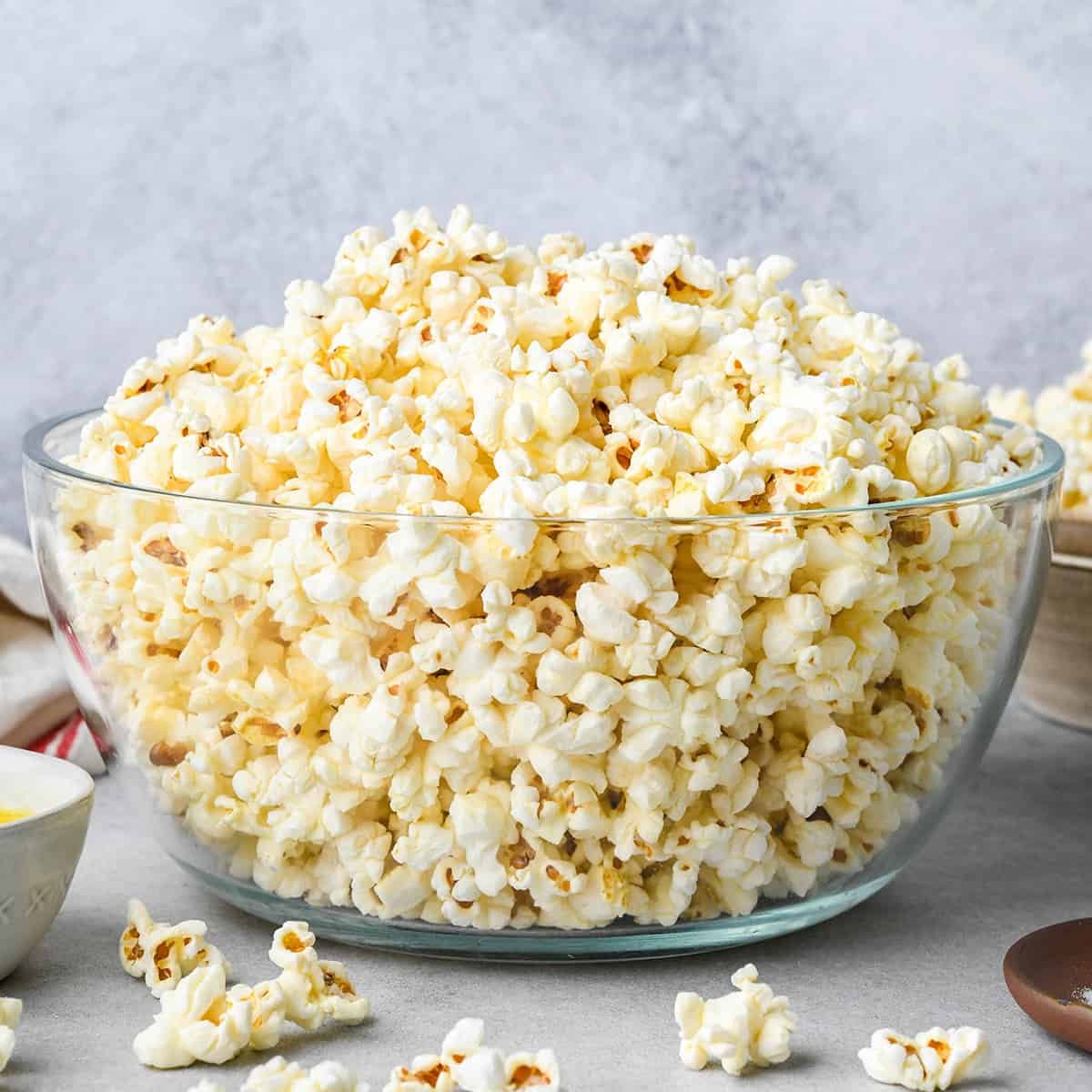
Homemade butter popcorn is a quick, crunchy, buttery snack made with just four ingredients: popcorn kernels, coconut oil, real butter, and salt. This easy stovetop popcorn recipe takes only 5 minutes and gives you freshly popped popcorn with a rich buttery coating and just the right amount of salt.
The secret to evenly buttered popcorn is simple: pop the kernels in coconut oil, melt the butter separately, and shake everything together in a covered bowl. This distributes the melted butter throughout the popcorn instead of leaving some pieces soaked and others completely plain.
It’s an easy choice for movie nights, family gatherings, game nights, or whenever you want a warm, savory snack without relying on microwave popcorn packets.
Why You’ll Love This Butter Popcorn Recipe
- Only four ingredients: Popcorn kernels, coconut oil, butter, and salt are all you need.
- Ready in 5 minutes: Fresh popcorn takes just a few minutes to make once your ingredients are prepared.
- Made with real butter: Melted salted butter creates a rich, savory coating without artificial butter flavoring.
- Evenly seasoned: Shaking the popcorn in a covered bowl helps distribute the butter and salt.
- Easy to adjust: Add more or less popcorn salt depending on your taste.
- Great for sharing: The recipe makes eight servings and can be doubled by popping the kernels in separate batches.
Ingredients You’ll Need
You don’t need a long ingredient list to make flavorful stovetop butter popcorn. The cooking technique is what makes the difference.
Four Simple Ingredients
- ½ cup popcorn kernels
- 1 tablespoon coconut oil
- 6 tablespoons salted butter, melted
- ½ teaspoon popcorn salt, or to taste
What Each Ingredient Does
Popcorn kernels: Use your favorite variety of popcorn kernels. Fresh, properly stored kernels tend to pop more reliably than older kernels that have lost moisture.
Coconut oil: Coconut oil helps transfer heat to the kernels during popping. The recipe uses it because it works well for stovetop popcorn without adding a noticeable coconut flavor.
Salted butter: Real melted butter provides the rich flavor that makes homemade butter popcorn so satisfying. Adding it after popping helps avoid exposing the butter to the full cooking heat.
Popcorn salt: Finely ground popcorn salt is especially useful because its small particles stick to the popcorn more readily than coarse salt crystals.
How to Make Homemade Butter Popcorn
This recipe uses a stovetop popcorn maker, such as a Whirley Pop, which allows you to keep the kernels moving while they heat. Continuous stirring helps distribute the heat and reduces the chance of burning.
Step 1: Melt the Butter
Place 6 tablespoons salted butter in a microwave-safe bowl.
Heat until fully melted, using short intervals if necessary to prevent splattering.
Set the butter aside while you prepare the popcorn.
Melting it in advance means the popcorn can be seasoned immediately after popping, while it’s still hot.
Step 2: Heat the Coconut Oil
Add 1 tablespoon coconut oil and three popcorn kernels to your stovetop popcorn maker.
Place it over medium heat and begin stirring.
The three kernels act as a simple temperature test, helping you determine when the oil is ready for the remaining popcorn.
Step 3: Wait for the Test Kernels to Pop
Continue stirring until all three test kernels have popped.
This indicates that the oil has reached a temperature suitable for popping.
Using this method helps prevent adding the full batch of kernels before the oil is hot enough.
Step 4: Add the Remaining Popcorn Kernels
Add the rest of the ½ cup popcorn kernels to the popcorn maker.
Secure the lid and stir vigorously.
As the kernels heat, they will begin popping and expanding.
Keep the stirring mechanism moving throughout the process to help prevent kernels from sitting in one hot spot.
Step 5: Finish Popping
Continue stirring while the popcorn pops.
When the popping slows significantly, turn off the heat.
Keep stirring over the warm burner until the popping stops.
Avoid leaving the popcorn on the hot burner longer than necessary, since already-popped kernels can scorch.
Step 6: Transfer to a Large Bowl
Immediately pour the finished popcorn into a large bowl.
A bowl with a secure lid is particularly useful for the next step.
If your bowl doesn’t have a lid, use a baking sheet or another suitable cover that fits securely.
Be careful when transferring the popcorn because the popcorn maker and its contents will be hot.
Step 7: Add the Butter and Salt
Drizzle the melted butter over the popcorn, distributing it across the surface rather than pouring everything into one spot.
Sprinkle ½ teaspoon popcorn salt evenly over the popcorn.
Adding both ingredients before shaking allows them to spread throughout the bowl.
Step 8: Shake and Serve
Secure the bowl’s lid.
Carefully invert the covered bowl and shake vigorously to distribute the butter and salt.
Return the bowl upright, remove the lid, and taste the popcorn.
Add a little more salt if desired.
Serve immediately while the popcorn is warm and crisp.
How to Get Evenly Buttered Popcorn
One of the most common problems with homemade butter popcorn is uneven seasoning.
Some kernels end up heavily coated with butter, while others remain dry.
The covered-bowl shaking method helps solve this problem.
Drizzle instead of pouring: Move the butter around the bowl as you add it rather than pouring it into one concentrated area.
Use a large bowl: Extra room makes it easier for the popcorn to move around while shaking.
Cover the bowl securely: A properly fitted lid prevents popcorn from spilling when the bowl is inverted.
Shake thoroughly: Turning and shaking the bowl helps distribute the melted butter and fine salt across more of the popcorn.
The butter won’t necessarily coat every kernel identically, but this method creates a more even result than stirring only the top layer.
Tips for the Best Stovetop Popcorn
Use Medium Heat
High heat isn’t necessary for popping corn.
Medium heat gives the kernels time to warm while reducing the risk of scorching the coconut oil or burning popped kernels.
Test the Oil Temperature
Adding three kernels before the full batch takes the guesswork out of knowing when the oil is hot enough.
Once they pop, add the remaining kernels and start stirring.
Keep the Kernels Moving
A Whirley Pop’s stirring mechanism helps distribute the kernels across the cooking surface.
Continue stirring throughout popping, particularly as the pot fills with expanded popcorn.
Add Butter After Popping
Butter contains water and milk solids, which behave differently from pure cooking oil when heated.
Melting the butter separately and adding it afterward gives the popcorn its buttery flavor without requiring the butter to withstand the full popping process.
Use Fine Popcorn Salt
Large salt crystals often fall to the bottom of the bowl.
Fine popcorn salt distributes more evenly and clings better to the irregular surfaces of popped kernels.
Serve Immediately
Fresh popcorn has its best texture shortly after popping.
As buttered popcorn sits, moisture from the butter and surrounding air can gradually soften the kernels.
Common Mistakes to Avoid
Mistake: Adding All the Kernels Before the Oil Is Ready
Starting with cold oil and a full batch can lead to inconsistent popping.
Instead, heat the oil with three test kernels and add the remaining kernels after they pop.
Mistake: Not Stirring During Popping
Stationary kernels may remain in contact with the hottest part of the cooking surface.
Keep stirring so the kernels move around as they heat and pop.
Mistake: Cooking Until Every Last Kernel Pops
Waiting too long for a few stubborn kernels can burn the popcorn that’s already finished.
When popping slows substantially, turn off the heat and continue stirring briefly over the warm burner.
Mistake: Pouring All the Butter in One Place
Concentrated melted butter can make a portion of the popcorn soggy.
Drizzle it around the bowl before shaking.
Mistake: Using Coarse Salt
Coarse salt doesn’t adhere as easily to popcorn.
Choose finely ground popcorn salt for better distribution.
Troubleshooting Homemade Butter Popcorn
Why Is My Popcorn Chewy Instead of Crispy?
Chewy popcorn can result from trapped steam, excessive moisture, or too much melted butter concentrated in one area.
Transfer the popcorn promptly after popping, avoid trapping steam for longer than needed, and distribute the butter evenly.
Why Does My Popcorn Burn?
Burning can happen when the heat is too high, the kernels aren’t stirred sufficiently, or the popcorn remains over the heat after popping slows.
Use medium heat, keep the stirring mechanism moving, and remove the popcorn promptly once popping stops.
Why Are There So Many Unpopped Kernels?
Unpopped kernels can result from old or improperly stored popcorn, uneven heating, or stopping the popping process too early.
Use fresh kernels, wait for the test kernels to pop before adding the full batch, and continue stirring while the popping slows.
Why Does the Salt Fall to the Bottom of the Bowl?
Coarse salt particles don’t cling well to popcorn.
Finely ground popcorn salt is a better choice. Adding it while the popcorn is lightly coated with melted butter also helps distribute the seasoning.
Why Does My Popcorn Become Soggy After Adding Butter?
Regular melted butter contains water, which can soften popcorn when applied heavily or unevenly.
Drizzle the butter across the popcorn instead of pouring it into one spot, then shake the covered bowl thoroughly.
For an alternative approach, clarified butter contains much less water than regular melted butter and may help maintain crispness, although it changes the original recipe.
Ingredient Substitutions
This recipe is designed around coconut oil, salted butter, and popcorn salt, but there are a few practical alternatives.
| Original Ingredient | Alternative | What Changes |
|---|---|---|
| Coconut oil | Canola oil | Neutral flavor and similar stovetop use |
| Coconut oil | Olive oil | Adds a potentially noticeable olive oil flavor |
| Salted butter | Unsalted butter | May require slightly more popcorn salt |
| Popcorn salt | Finely ground regular salt | Similar seasoning, provided it is ground very fine |
| Regular popcorn kernels | Another popcorn variety | Kernel size, texture, and popped volume may vary |
The supplied recipe also notes that butter has been tried as an alternative popping fat. However, coconut oil remains the preferred option because ordinary butter’s milk solids can burn during stovetop popping.
Easy Butter Popcorn Variations
Extra-Buttery Popcorn
For a more pronounced butter flavor, you can experiment with a slightly larger amount of melted butter.
Keep in mind that more regular butter may soften the popcorn, particularly if it collects in one place.
Lightly Salted Popcorn
Start with less than the recommended ½ teaspoon popcorn salt.
Shake the popcorn and taste before adding more.
This is useful when you want a milder salty flavor.
Garlic Butter Popcorn
Mix a small amount of garlic powder into the melted butter before drizzling it over the popcorn.
Use a light hand, since garlic powder can become overpowering.
Parmesan Butter Popcorn
After coating the popcorn with butter, sprinkle on finely grated Parmesan cheese.
Toss or shake again to distribute the cheese.
This creates a savory variation with a slightly different texture.
Cinnamon-Sugar Popcorn
For a sweet variation, use a lighter amount of salt and sprinkle cinnamon sugar over the buttered popcorn.
Toss thoroughly so the coating is distributed.
These optional variations change the original recipe’s flavor and nutritional values.
What to Serve With Butter Popcorn
Butter popcorn is satisfying on its own, especially when freshly prepared.
For a casual movie-night snack table, pair it with pretzels, roasted nuts, or other crunchy snacks.
If you’re planning a larger gathering, serve it alongside simple finger foods such as cheese, crackers, or bite-sized appetizers.
You can also prepare separate bowls with different seasonings so guests can choose between classic salted popcorn and flavored versions.
For the best texture, season the popcorn immediately before serving.
Can You Double This Butter Popcorn Recipe?
Yes. This butter popcorn recipe can be doubled to make more servings.
However, a regular Whirley Pop should not be overloaded with a double quantity of kernels.
Instead, pop the kernels in two separate batches.
For a doubled recipe, use a total of 1 cup popcorn kernels, 2 tablespoons coconut oil, 12 tablespoons melted salted butter, and 1 teaspoon popcorn salt, adjusting salt to taste.
Prepare each batch with the appropriate amount of coconut oil, then combine the popped corn in a sufficiently large bowl before seasoning.
Working in batches gives the kernels room to expand and helps maintain even popping.
How to Store Leftover Butter Popcorn
Homemade butter popcorn tastes best immediately after preparation, while it’s warm and freshly popped.
If you have leftovers, allow the popcorn to cool before transferring it to an airtight container.
Store it at room temperature for up to 2 days, following the supplied recipe guidance.
Keep the container sealed and away from moisture to help preserve its texture.
Because this popcorn contains real butter, avoid leaving it in a warm or humid location. Refrigerate if it cannot be kept in a cool environment, though chilling may soften its texture.
Discard leftovers if they develop an unusual smell or other signs of spoilage.
Can You Reheat Butter Popcorn?
Yes, although freshly popped popcorn will generally have the best texture.
If leftover popcorn has softened slightly, you can spread it on a baking sheet and warm it briefly in a low oven until it becomes more crisp.
Keep an eye on it because buttered popcorn can brown or scorch quickly.
Avoid prolonged heating, and let the popcorn cool slightly before checking the texture.
Reheating cannot reliably restore popcorn that has become excessively soggy.
Frequently Asked Questions
How Do You Make Butter Popcorn at Home?
Heat coconut oil with a few test kernels in a stovetop popcorn maker. When they pop, add the remaining kernels, cover, and stir until popping finishes. Transfer the popcorn to a bowl, drizzle with melted salted butter, add fine popcorn salt, and shake to coat.
What Is the Best Butter for Homemade Popcorn?
Salted butter works well in this recipe because it adds both buttery flavor and seasoning. Unsalted butter is also suitable, but you may need a little more salt.
Why Do You Add Butter After Popping?
Adding melted butter after popping prevents the butter from being exposed to the full heat required to pop the kernels. It also allows you to distribute the butter across the finished popcorn.
Can I Make Butter Popcorn Without a Whirley Pop?
Yes. A heavy-bottomed stovetop pot with a lid can also pop popcorn. Use an appropriate pot-popping method that keeps the kernels moving and allows steam to escape safely. Follow the same butter and salt quantities once the kernels have popped.
Can I Use Olive Oil Instead of Coconut Oil?
Yes. Olive oil can be used, although its flavor may be more noticeable. Choose an oil suitable for the heat used during popping.
How Do You Keep Butter Popcorn From Getting Soggy?
Add the melted butter after popping, drizzle it evenly, and shake the popcorn thoroughly in a covered bowl. Avoid letting large amounts of butter collect in one area.
How Much Butter Do I Need for ½ Cup Popcorn Kernels?
This recipe uses 6 tablespoons melted salted butter for ½ cup unpopped kernels.
Can I Make Butter Popcorn Ahead of Time?
You can prepare it ahead, but it’s best served immediately. The texture becomes less crisp during storage, especially after adding melted butter.
Is Homemade Butter Popcorn Gluten-Free?
Plain popcorn kernels, coconut oil, butter, and salt are naturally gluten-free ingredients. Check packaged seasonings and other products for cross-contact if preparing the recipe for someone who needs to avoid gluten.