
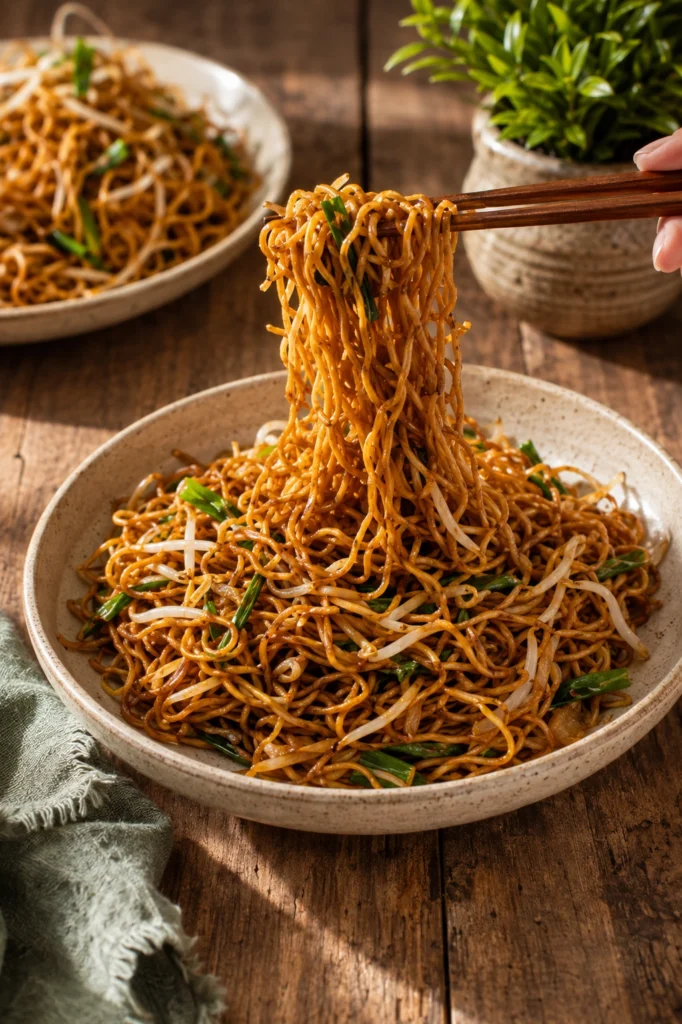
Crispy Cantonese chow mein noodles tossed with bean sprouts, onions, green onions, and a glossy sweet-savory soy sauce. Ready in just 15 minutes, this quick stir-fry makes a satisfying meal on its own or an easy side dish for your favorite Chinese-inspired dishes.
Why You’ll Love This Cantonese Chow Mein
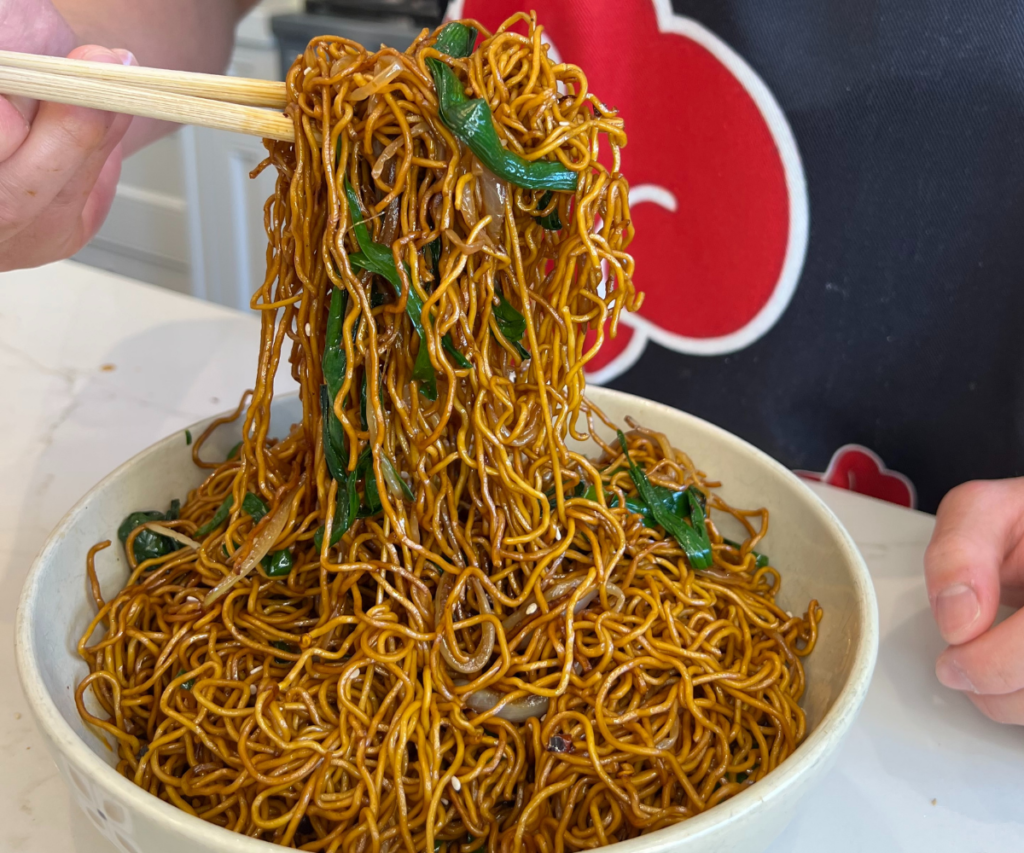
Cantonese chow mein is all about contrast: crisp noodles, fresh crunchy vegetables, and a savory sauce that coats everything without making the noodles heavy. The noodles are briefly softened, then pan-fried in a hot wok until golden and crisp before the vegetables and sauce are added.
This version keeps the preparation simple while building plenty of flavor from dark soy sauce, regular soy sauce, oyster sauce, fish sauce, and a touch of sugar. A drizzle of sesame oil at the end adds a nutty finish.
The entire recipe takes about 15 minutes, making it especially useful when you want a fast lunch, dinner, or flavorful side dish without a long ingredient list.
Ingredients You’ll Need
- 12 ounces fresh chow mein egg noodles, thin Hong Kong-style noodles
- 1/2 small yellow onion, thinly sliced
- 5 stalks green onions, cut into 2-inch pieces, whites and greens divided
- 2 cups bean sprouts
- 3 tablespoons corn oil or another neutral oil
- 1 teaspoon sesame oil, for finishing
For the Stir-Fry Sauce
- 2 tablespoons dark soy sauce
- 1 tablespoon regular soy sauce
- 1 tablespoon oyster sauce
- 1/2 teaspoon fish sauce
- 1 tablespoon granulated sugar
- 1 tablespoon water
Ingredient Notes
Fresh Hong Kong-style chow mein noodles are the best choice for this recipe because they develop a crisp exterior while staying pleasantly chewy inside. Look for thin fresh egg noodles rather than thick noodles intended for lo mein.
Dark soy sauce gives the noodles their deep color and adds a richer flavor, while regular soy sauce contributes saltiness and savory depth.
Oyster sauce brings a rounded, savory sweetness to the sauce. Fish sauce is used in a small amount to intensify the umami flavor without making the dish taste strongly of fish.
Bean sprouts add a fresh, juicy crunch that contrasts nicely with the crisp noodles.
Corn oil is used for stir-frying because of its neutral flavor, but several other neutral cooking oils work well too.
How to Make Cantonese Chow Mein
Prepare the Noodles
Pour boiling water over the fresh chow mein noodles and let them soak for 30 seconds to 1 minute, just until softened.
Drain them thoroughly and gently pat them dry. Removing excess water is important because wet noodles can cause the hot oil to splatter and can interfere with crisping.
Mix the Stir-Fry Sauce
Add the dark soy sauce, regular soy sauce, oyster sauce, fish sauce, sugar, and water to a small bowl.
Stir until the sugar has dissolved and the sauce is evenly combined. Having the sauce ready before you start cooking makes the stir-fry much easier to manage.
Cook the Onions
Heat 1 tablespoon of corn oil in a wok over medium-high heat until hot. Add the sliced yellow onion and the white parts of the green onions.
Stir-fry for about 1 minute, just until the onions begin to soften and become fragrant. Transfer them to a plate and set aside.
Crisp the Noodles
Add another tablespoon of corn oil to the hot wok. Once the oil is hot, add the noodles and spread them into a thin, even layer.
Let them cook undisturbed for about 2 minutes so the bottom can crisp.
Carefully flip the noodles. Drizzle the remaining tablespoon of oil around the perimeter of the wok and continue cooking for another 2 minutes, until the noodles are crisp and lightly golden.
Add the Vegetables and Sauce
Return the cooked onion mixture to the wok. Add the green parts of the green onions, bean sprouts, and prepared sauce.
Gently toss everything together for 1 to 2 minutes. The vegetables should remain pleasantly crisp while the sauce coats the noodles.
Taste and adjust the seasoning if needed.
Finish With Sesame Oil
Remove the wok from the heat and drizzle in the sesame oil. Toss gently to distribute it throughout the noodles.
Serve the chow mein immediately while the noodles are at their crispiest.
Helpful Recipe Tips
- Use fresh, thin Hong Kong-style chow mein egg noodles for the best combination of crispness and chew.
- Don’t skip the brief hot-water soak. It softens fresh noodles enough for stir-frying without overcooking them.
- Drain and pat the noodles dry before they go into the wok to reduce splattering.
- Have every ingredient measured and ready before turning on the heat. Stir-frying moves quickly.
- Make sure the wok and oil are hot before adding the noodles. A properly heated pan helps create a crisp surface.
- Spread the noodles into a thin layer and give them time to brown before flipping.
- Avoid constantly stirring the noodles while they crisp. Too much movement prevents them from developing that characteristic crunchy texture.
- If adding protein, cook it first and remove it from the wok. Add it back during the final toss so it warms through without overcooking.
- Taste the finished chow mein before serving and adjust with a little extra soy sauce, sugar, or other seasoning if needed.
Easy Variations and Substitutions
Add Protein
Turn this into a more substantial meal by adding cooked chicken, beef, pork, shrimp, or tofu. Cook the protein before the noodles, remove it from the wok, and return it at the end.
Add More Vegetables
Broccoli, cabbage, bell peppers, snow peas, baby corn, carrots, and mushrooms all work well in chow mein. Cut vegetables into small, even pieces so they cook quickly.
Make It Spicy
For a spicy variation, toss in sliced fresh chili peppers, a little sriracha, chili flakes, or chili oil. Add the heat gradually so you can control the spice level.
Change the Cooking Oil
Corn oil can be replaced with vegetable oil, canola oil, avocado oil, or peanut oil. Choose a neutral oil with a high enough smoke point for wok cooking.
Use Different Noodles
If fresh chow mein noodles aren’t available, dry spaghetti, ramen noodles, or fresh lo mein noodles can be used. The texture will vary depending on the noodle, but the same stir-fry method can still work.
Swap the Green Onions
Chinese garlic chives can be used in place of green onions for a slightly more garlicky, aromatic flavor.
Change the Soy Sauce
Tamari or coconut aminos can be used in place of soy sauce. Keep in mind that the flavor and saltiness may differ, so taste the sauce before adding it to the noodles.
Use Brown Sugar
Brown sugar can replace granulated sugar for a slightly deeper, more caramel-like sweetness.
What to Serve With Cantonese Chow Mein
Cantonese chow mein is filling enough to serve by itself for a quick breakfast, lunch, or dinner. It also works beautifully as a side dish alongside other Chinese-inspired meals.
Serve it with:
- Stir-fried chicken
- Beef dishes
- Pork dishes
- Shrimp
- Tofu and vegetables
- Steamed or stir-fried vegetables
- Other Asian-inspired side dishes
If you’re adding protein and vegetables directly to the chow mein, it can easily become a complete one-pan meal.
How to Store and Reheat
Transfer leftover chow mein to an airtight container and refrigerate for up to 3 days.
For longer storage, cooled chow mein can be frozen in an airtight container for up to 3 months. Thaw it in the refrigerator overnight before reheating.
To reheat, pan-fry the noodles in a wok over the stove until heated through. This method helps bring some of the texture back to the noodles. You can also microwave the chow mein covered until warm, although the noodles will be softer.
Cantonese Chow Mein
2
servings5
minutes10
minutes912
kcal15
minutesCrispy chow mein noodles tossed with bean sprouts, onions, green onions, and a sweet-savory soy sauce stir-fry sauce.
Keep the screen of your device on
Ingredients
- For the Chow Mein
12 ounces fresh chow mein egg noodles, thin Hong Kong-style noodles
1/2 small yellow onion, thinly sliced
5 stalks green onions, cut into 2-inch pieces, whites and greens divided
2 cups bean sprouts
3 tablespoons corn oil or another neutral oil
1 teaspoon sesame oil, to finish
- For the Stir-Fry Sauce
2 tablespoons dark soy sauce
1 tablespoon regular soy sauce
1 tablespoon oyster sauce
1/2 teaspoon fish sauce
1 tablespoon granulated sugar
1 tablespoon water
Instructions
- Pour boiling water over the fresh chow mein noodles and soak for 30 seconds to 1 minute, until softened. Drain thoroughly and pat dry.
- In a small bowl, combine the dark soy sauce, regular soy sauce, oyster sauce, fish sauce, sugar, and water. Stir until the sugar has dissolved.
- Heat 1 tablespoon of corn oil in a wok over medium-high heat. Add the sliced onion and white parts of the green onions. Stir-fry for about 1 minute, then remove and set aside.Heat 1 tablespoon of corn oil in a wok over medium-high heat. Add the sliced onion and white parts of the green onions. Stir-fry for about 1 minute, then remove and set aside.
- Add another 1 tablespoon of corn oil to the hot wok. Add the noodles and spread them into a thin layer. Cook for about 2 minutes without disturbing them so they can crisp.
- Carefully flip the noodles. Add the remaining tablespoon of oil around the edge of the wok and cook for another 2 minutes, until the noodles are crisp and lightly golden.
- Add the cooked onion mixture, green parts of the green onions, bean sprouts, and prepared sauce. Gently toss for 1 to 2 minutes, until everything is combined and the sauce coats the noodles.
- Taste and adjust the seasoning if needed.
- Remove from the heat, drizzle with sesame oil, and toss gently. Serve immediately.
Notes
- Fresh thin Hong Kong-style chow mein noodles provide the best texture.
- Pat the noodles dry after soaking to reduce oil splattering.
- Keep all ingredients prepared and measured before cooking.
- Make sure the wok and oil are hot before adding the noodles.
- For a protein version, cook the protein first, remove it from the wok, and add it back at the end.
- Add extra soy sauce, sugar, or seasoning to taste if needed.
- Store leftovers in an airtight container in the refrigerator for up to 3 days.
- Freeze cooled chow mein for up to 3 months and thaw overnight in the refrigerator before reheating.
Frequently Asked Questions
What type of noodles are best for Cantonese chow mein?
Thin, fresh Hong Kong-style chow mein egg noodles are ideal. They soften quickly and can be pan-fried until crisp while retaining a chewy center.
Can I use dry noodles instead of fresh chow mein noodles?
Yes. Dry spaghetti or ramen noodles can be used when fresh chow mein noodles aren’t available. Cook them according to their package directions, drain them very well, and allow excess moisture to evaporate before stir-frying.
How do I make chow mein noodles crispy?
The key is a hot wok, enough oil, and minimal movement while the noodles cook. Spread the noodles into a thin layer and let them cook undisturbed for about 2 minutes before flipping.
Why do I need to dry the noodles before stir-frying?
Excess water can cause hot oil to splatter and can make it harder for the noodles to crisp. Drain them thoroughly and gently pat them dry before adding them to the wok.
Can I add chicken or shrimp to this chow mein?
Yes. Chicken, beef, pork, shrimp, and tofu are all good additions. Cook the protein separately in the wok, remove it, then add it back during the final stage of cooking.
Can I make Cantonese chow mein spicy?
Yes. Add fresh chili peppers, sriracha, chili flakes, or chili oil to the finished stir-fry. Start with a small amount and increase it according to your preferred heat level.
Can I freeze Cantonese chow mein?
Yes. Cool the chow mein completely and store it in an airtight container for up to 3 months. Thaw it overnight in the refrigerator before reheating.
How do I reheat leftover chow mein?
For the best texture, reheat the noodles in a hot wok or skillet until warmed through. You can also microwave them covered, although they won’t be as crisp.