Garlic Sesame Noodles combine brown rice noodles with a smooth, savory sauce made from toasted sesame oil, tahini, garlic, rice vinegar, ginger, and a touch of sweetness. They take just 15 minutes to prepare and can be served warm, chilled, or topped with vegetables and protein for a more substantial meal.
Jump to Recipe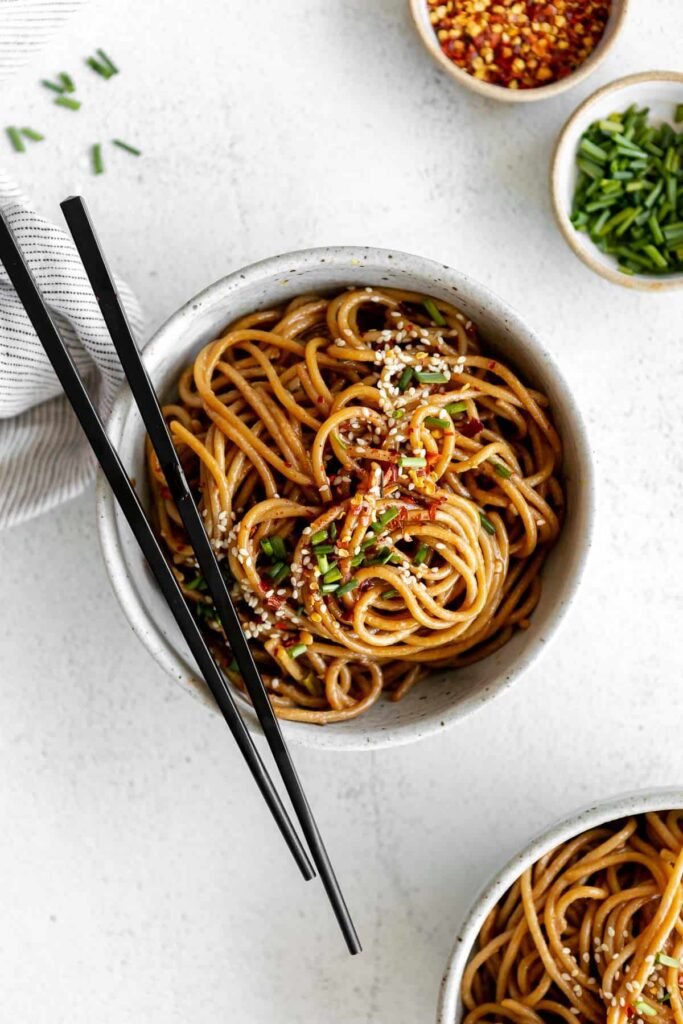
Recipe at a Glance
| Detail | Information |
|---|---|
| Prep Time | 5 minutes |
| Cook Time | 10 minutes |
| Total Time | 15 minutes |
| Servings | 4 |
| Calories | 305 kcal |
| Course | Main Course |
| Cuisine | Asian-Inspired |
| Cooking Method | Stovetop |
The recipe can be gluten-free when prepared with brown rice noodles and certified gluten-free tamari. Regular soy sauce usually contains wheat, so check the label if gluten avoidance is required.
Why You’ll Love This Recipe
- Ready in 15 minutes: The sauce comes together while the noodles cook.
- Simple pantry ingredients: Garlic, soy sauce or tamari, sesame oil, vinegar, and tahini create the main flavor.
- Enjoy it hot or cold: Serve the noodles immediately or chill them for later.
- Easy to customize: Add chicken, salmon, tofu, broccoli, or sautéed vegetables.
- Adjustable salt and heat: Begin with less soy sauce and increase the sriracha according to preference.
- Naturally dairy-free: The creamy texture comes from tahini rather than dairy.
Ingredients You’ll Need
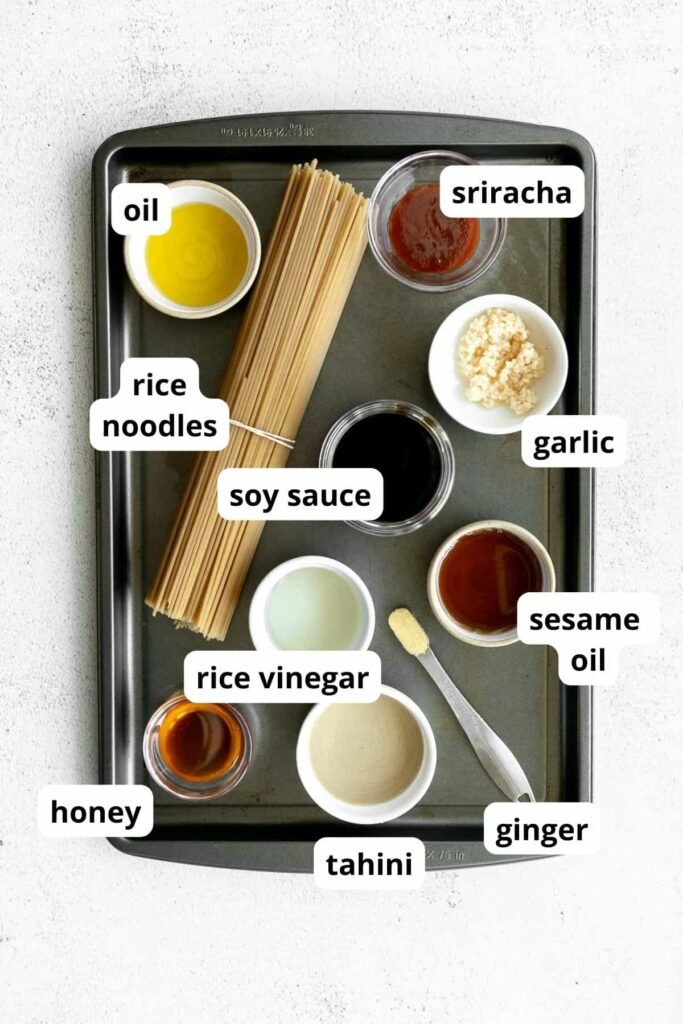
For the Noodles
- 12 ounces brown rice noodles
- 1 tablespoon neutral oil
- 6 garlic cloves, finely minced
The neutral oil is used to sauté the garlic. Olive oil, avocado oil, or refined coconut oil can be used.
Finely mince the garlic or use a garlic press. The sauce is not blended, so large pieces will remain noticeable in the finished noodles.
For the Garlic Sesame Sauce
- ¼–⅓ cup low-sodium soy sauce or tamari
- 2 tablespoons vegetable broth
- 1½ tablespoons rice vinegar
- 2 tablespoons toasted sesame oil
- 1 tablespoon honey or maple syrup
- 2 tablespoons tahini
- 2 teaspoons sriracha
- ½ teaspoon ground ginger
Start with ¼ cup of low-sodium soy sauce or tamari if you are sensitive to salt. Increase the amount only after considering the flavor of the finished sauce.
Toasted sesame oil supplies much of the characteristic sesame aroma. Tahini gives the sauce body and creaminess without requiring a separate thickener.
Optional Garnishes
- Sliced scallions
- Red pepper flakes
- Crushed peanuts
These garnishes are mentioned in the preparation instructions but are not included in the measured ingredient list. Add them according to preference.
Ingredient Substitutions
Brown Rice Noodles
You can use:
- Ramen noodles
- Soba noodles
- Udon noodles
- Regular spaghetti
- Brown rice spaghetti
- Another preferred noodle
Cooking time and texture will vary, so prepare the selected noodles according to their package instructions.
If the meal must be gluten-free, verify the label carefully. Not every soba, ramen, or udon product is gluten-free.
Soy Sauce or Tamari
Low-sodium soy sauce or tamari can be used. Regular soy sauce may make the sauce excessively salty.
For a gluten-free version, use certified gluten-free tamari or another verified gluten-free alternative. Do not assume regular soy sauce is gluten-free.
Honey
Replace honey with:
- Maple syrup
- Brown sugar
- Coconut sugar
Maple syrup keeps the recipe free from animal-derived ingredients. Granulated sweeteners may take slightly more whisking to dissolve completely.
Tahini
Peanut butter or sesame paste can replace tahini.
Peanut butter gives the sauce a more noticeable peanut flavor, while sesame paste may have a stronger roasted character depending on the product.
Sriracha
Another preferred hot sauce can replace sriracha. Because hot sauces differ in heat, sweetness, acidity, and salt, add the substitute gradually.
Vegetable Broth
Vegetable broth is part of the supplied sauce. Replacing it may affect both the flavor and sauce consistency, so no exact alternative is presented as equivalent.
How to Make Garlic Sesame Noodles
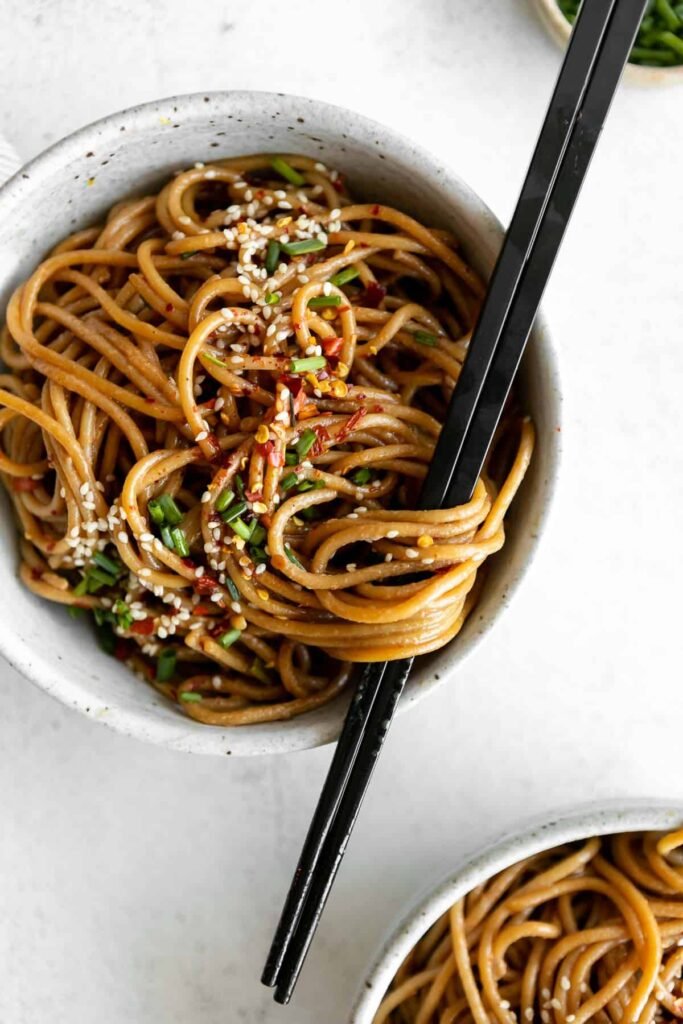
1. Cook the Noodles
Bring a large pot of water to a boil.
Add the brown rice noodles and cook them according to the package instructions. Different brands can require different cooking times, so use the package rather than one fixed time.
Avoid overcooking the noodles. They will be tossed with the warm sauce after draining and may soften slightly during that step.
2. Prepare the Garlic
While the water heats, finely mince the six garlic cloves or press them through a garlic press.
Small pieces distribute more evenly throughout the sauce and are less likely to leave harsh bites of garlic.
3. Sauté the Garlic
Add 1 tablespoon of neutral oil to a pan, followed by the minced garlic.
Sauté until the edges of the garlic become golden brown. Stir regularly so the small pieces cook evenly.
Do not wait until all the garlic is deeply brown. Garlic continues cooking in the hot pan and can quickly develop a bitter flavor if burned.
4. Whisk the Sauce
While the garlic cooks, combine the following ingredients in a bowl:
- Low-sodium soy sauce or tamari
- Vegetable broth
- Rice vinegar
- Toasted sesame oil
- Honey or maple syrup
- Tahini
- Sriracha
- Ground ginger
Whisk until the tahini is evenly distributed and no visible clumps of ground ginger remain.
Tahini can initially make the mixture look separated or uneven. Continue whisking until the sauce becomes cohesive.
5. Add the Sauce to the Pan
Pour the prepared sauce into the pan with the sautéed garlic.
Stir well, scraping the garlic from the bottom so it becomes evenly incorporated.
6. Simmer Briefly
Let the sauce simmer for 2–3 minutes, or until it thickens slightly.
The goal is a sauce that coats the noodles rather than a very thick paste. Keep stirring and watch the heat because the sweetener and garlic can catch on the bottom.
7. Combine the Noodles and Sauce
Drain the cooked noodles thoroughly and add them to the pan.
Toss until every strand is coated with the garlic sesame sauce. Make sure the garlic and tahini mixture is distributed throughout rather than remaining at the bottom.
8. Garnish and Serve
Serve the noodles warm, or allow them to cool if you prefer them chilled.
Finish with sliced scallions, red pepper flakes, or crushed peanuts as desired.
Tips for the Best Garlic Sesame Noodles
Prepare the sauce while the noodles cook. The recipe takes only 15 minutes, so having the sauce ready helps everything come together efficiently.
Mince the garlic very finely. The sauce is not blended, which means large garlic pieces will remain intact.
Use low-sodium soy sauce or tamari. Regular soy sauce can overpower the other ingredients and make the noodles too salty.
Begin with ¼ cup of soy sauce. You can increase it toward ⅓ cup if you want a stronger savory flavor.
Watch the garlic closely. Remove it from the sautéing stage once the edges become golden. Dark brown garlic may taste bitter.
Whisk until the tahini is fully incorporated. Tahini can cling together at first, but continued whisking helps create a smooth sauce.
Do not over-reduce the sauce. It only needs 2–3 minutes to thicken slightly. Excessive simmering can make it too concentrated.
Double the sauce when adding substantial extras. Chicken, tofu, or a large quantity of vegetables will absorb and spread out the sauce.
Common Mistakes to Avoid
Using Regular Full-Sodium Soy Sauce
The sauce contains up to ⅓ cup of soy sauce or tamari. A full-sodium product can make the finished noodles much too salty.
Use a low-sodium version and start with the smaller measurement.
Burning the Garlic
Finely minced garlic cooks quickly. Stir it regularly and add the sauce as soon as the edges look golden.
Leaving Clumps of Tahini or Ginger
Whisk the sauce before pouring it into the pan. This prevents concentrated pockets of tahini or ground ginger in the finished noodles.
Overcooking the Noodles
Brown rice noodles can become overly soft or sticky when cooked too long. Follow the package directions and combine them with the sauce as soon as they are ready.
Making Too Little Sauce for Added Ingredients
The original sauce quantity is designed for 12 ounces of noodles. If you add plenty of chicken, tofu, or vegetables, double the sauce so the complete dish remains evenly coated.
Assuming the Recipe Is Always Gluten-Free
The recipe is gluten-free only when all selected ingredients meet that requirement. Use gluten-free noodles and certified gluten-free tamari, and verify the labels on sriracha, broth, tahini, and other packaged ingredients.
Troubleshooting
Why Are My Noodles Too Salty?
Too much soy sauce or a full-sodium variety was likely used.
Begin with ¼ cup of low-sodium soy sauce or tamari. Remember that added proteins, garnishes, and sauces may also contain sodium.
Why Is My Sauce Too Thick?
The sauce may have simmered too long, or the tahini may be especially thick.
Remove the pan from the heat as soon as the sauce lightly thickens. Because no specific thinning instructions were supplied, add any extra liquid cautiously.
Why Is My Sauce Too Thin?
Allow it to simmer for the full 2–3 minutes while stirring. The tahini should help it coat the noodles once everything is combined.
Why Does the Garlic Taste Bitter?
The garlic was probably cooked beyond golden brown. Add the sauce as soon as the garlic edges turn golden to stop it from frying further.
Why Are My Noodles Sticking Together?
The noodles may have been overcooked or left sitting after draining. Prepare the sauce while they cook and combine everything promptly.
Why Isn’t the Sauce Smooth?
Continue whisking until the tahini is completely distributed and the ground ginger has no visible clumps. Tahini may need a little extra mixing before the sauce looks uniform.
Recipe Variations
Make It Vegan
Use maple syrup, brown sugar, or coconut sugar instead of honey.
Check the labels on the noodles, broth, tamari, sriracha, and other packaged ingredients to confirm they meet your requirements.
Make Peanut Sesame Noodles
Replace the tahini with peanut butter and garnish the noodles with crushed peanuts.
This creates a more noticeable peanut flavor than the original sesame-focused version.
Add Chicken or Salmon
Serve the noodles with cooked chicken or salmon for additional protein.
Double the sauce if you are mixing a significant amount of protein directly into the noodles.
Add Tofu
Keep the meal plant-based by adding peanut tofu or teriyaki tofu.
The tofu can be served over the noodles or tossed into them. Double the sauce when adding a substantial quantity.
Add Vegetables
Mix in steamed broccoli or sautéed vegetables.
The noodles can also be turned into a more substantial stir-fry. Prepare the vegetables separately, then combine them with the noodles and sauce.
Increase the Heat
Add more sriracha to the sauce or finish the noodles with red pepper flakes.
The original recipe contains 2 teaspoons of sriracha but is described as mild. Actual heat will depend on the sriracha brand and personal tolerance.
What to Serve With Garlic Sesame Noodles
The noodles can be served alone as a simple meal or paired with protein and vegetables.
Suitable additions include:
- Cooked chicken
- Salmon
- Peanut tofu
- Teriyaki tofu
- Steamed broccoli
- Sautéed vegetables
- Crushed peanuts
- Sliced scallions
If adding several ingredients, double the sauce so there is enough to coat the noodles and additions.
How to Store Garlic Sesame Noodles
Transfer the prepared noodles to an airtight container and refrigerate them for up to 5 days.
Allow hot noodles to cool appropriately before sealing and refrigerating them. Keep garnishes such as crushed peanuts and scallions separate when possible so they retain more of their texture.
The noodles may absorb sauce and become firmer as they chill.
How to Reheat Sesame Noodles
Microwave
Place an individual portion in a microwave-safe container and heat in short intervals. Stir between intervals so the noodles warm evenly.
Stovetop
Add the noodles to a pan and warm them over moderate heat, stirring regularly to prevent sticking.
No specific additional liquid is included in the supplied reheating instructions, so make any consistency adjustment gradually.
Serve Cold
These garlic sesame noodles can also be eaten cold. Stir them before serving to redistribute the sauce.
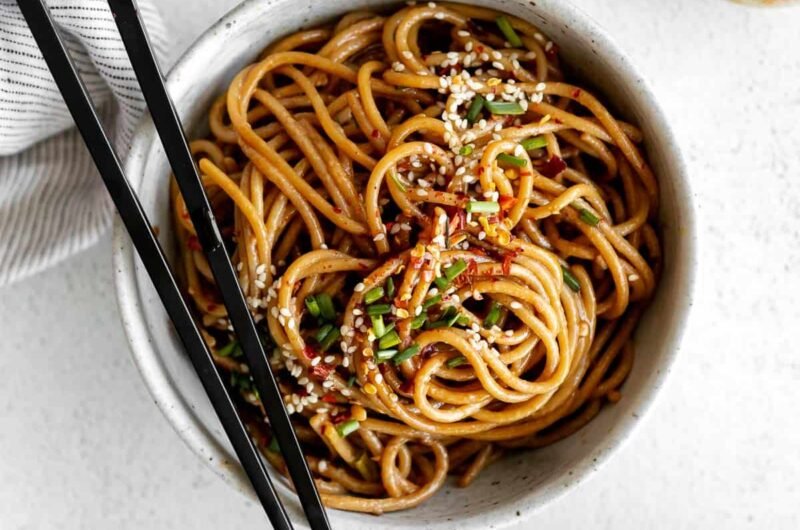
Garlic Sesame Noodles
Course: Main CourseCuisine: Asian-Inspired4
servings5
minutes10
minutes305
kcal15
minutesBrown rice noodles tossed in a quick garlic sesame sauce made with tamari, toasted sesame oil, tahini, rice vinegar, ginger, and a touch of sweetness.
Ingredients
12 ounces brown rice noodles
1 tablespoon neutral oil
6 garlic cloves, finely minced
¼–⅓ cup low-sodium soy sauce or tamari
2 tablespoons vegetable broth
1½ tablespoons rice vinegar
2 tablespoons toasted sesame oil
1 tablespoon honey or maple syrup
2 tablespoons tahini
2 teaspoons sriracha
½ teaspoon ground ginger
Optional Garnishes
Sliced scallions
Red pepper flakes
Crushed peanuts
Exact garnish quantities were not supplied.
Instructions
- Bring a large pot of water to a boil.
- Add the brown rice noodles and cook according to their package instructions.
- Finely mince the garlic or process it through a garlic press.
- Add the neutral oil and minced garlic to a pan.
- Sauté until the edges of the garlic become golden brown, stirring regularly.
- While the garlic cooks, whisk together the low-sodium soy sauce or tamari, vegetable broth, rice vinegar, toasted sesame oil, honey or maple syrup, tahini, sriracha, and ground ginger.
- Continue whisking until the tahini is evenly distributed and no visible ginger clumps remain.
- Pour the sauce into the pan with the garlic and stir well.
- Simmer for 2–3 minutes, or until the sauce thickens slightly.
- Drain the cooked noodles and add them to the pan.
- Toss until the noodles are evenly coated with the sauce.
- Garnish with scallions, red pepper flakes, or crushed peanuts as desired.
- Serve warm or cold.
Notes
- Use low-sodium soy sauce or tamari. Regular soy sauce may make the noodles too salty.
- Start with ¼ cup of soy sauce if you are sensitive to salt.
- Olive oil, avocado oil, or refined coconut oil can be used to sauté the garlic.
- The recipe is described as mild, but heat depends on the sriracha used and personal tolerance.
- Double the sauce when adding a substantial amount of vegetables, chicken, tofu, or another protein.
- For a gluten-free version, use gluten-free noodles and certified gluten-free tamari.
- Refrigerate the noodles in an airtight container for up to 5 days.
- Serve them cold or reheat them in the microwave or on the stove.
Nutrition Per Serving
The supplied serving is one-quarter of the complete recipe.
| Nutrient | Amount |
|---|---|
| Calories | 305 kcal |
| Carbohydrates | 47 g |
| Protein | 7.2 g |
| Fat | 12.8 g |
| Fiber | 2.5 g |
| Sugar | 4.8 g |
Nutritional Information Disclaimer: Nutrition information is an estimate and may vary according to the noodles, soy sauce or tamari, sweetener, tahini, garnishes, serving size, and optional additions used.
Are Garlic Sesame Noodles Gluten-Free?
They can be gluten-free when made with brown rice noodles and certified gluten-free tamari.
Regular soy sauce typically contains wheat. Check every packaged ingredient if gluten avoidance is medically necessary.
Can I Use Regular Spaghetti?
Yes. Regular spaghetti can replace brown rice noodles. It will change the texture and will not keep the recipe gluten-free unless a gluten-free variety is used.
Can I Eat These Noodles Cold?
Yes. The noodles can be served hot or cold. Stir chilled noodles before serving to redistribute the sauce.
Is This Recipe Spicy?
The supplied recipe describes the noodles as mild despite containing 2 teaspoons of sriracha. Heat varies by brand and personal preference.
Add more hot sauce or red pepper flakes if you want a spicier result.
Can I Use Peanut Butter Instead of Tahini?
Yes. Peanut butter can replace tahini, but it will produce a more prominent peanut flavor.
Can I Make the Recipe Vegan?
Yes. Replace the honey with maple syrup, brown sugar, or coconut sugar, and verify that the remaining packaged ingredients are suitable.
Why Should I Use Low-Sodium Soy Sauce?
The sauce uses between ¼ and ⅓ cup. Regular soy sauce can make the noodles excessively salty, so a low-sodium product gives you better control.
Can I Add Vegetables?
Yes. Steamed broccoli or sautéed vegetables can be added. Double the sauce when adding a large volume of vegetables.
How Long Do Garlic Sesame Noodles Last?
Store them in an airtight container in the refrigerator for up to 5 days.
Can I Freeze Garlic Sesame Noodles?
Freezing instructions were not supplied, so a specific freezing duration or guaranteed texture cannot be recommended.