
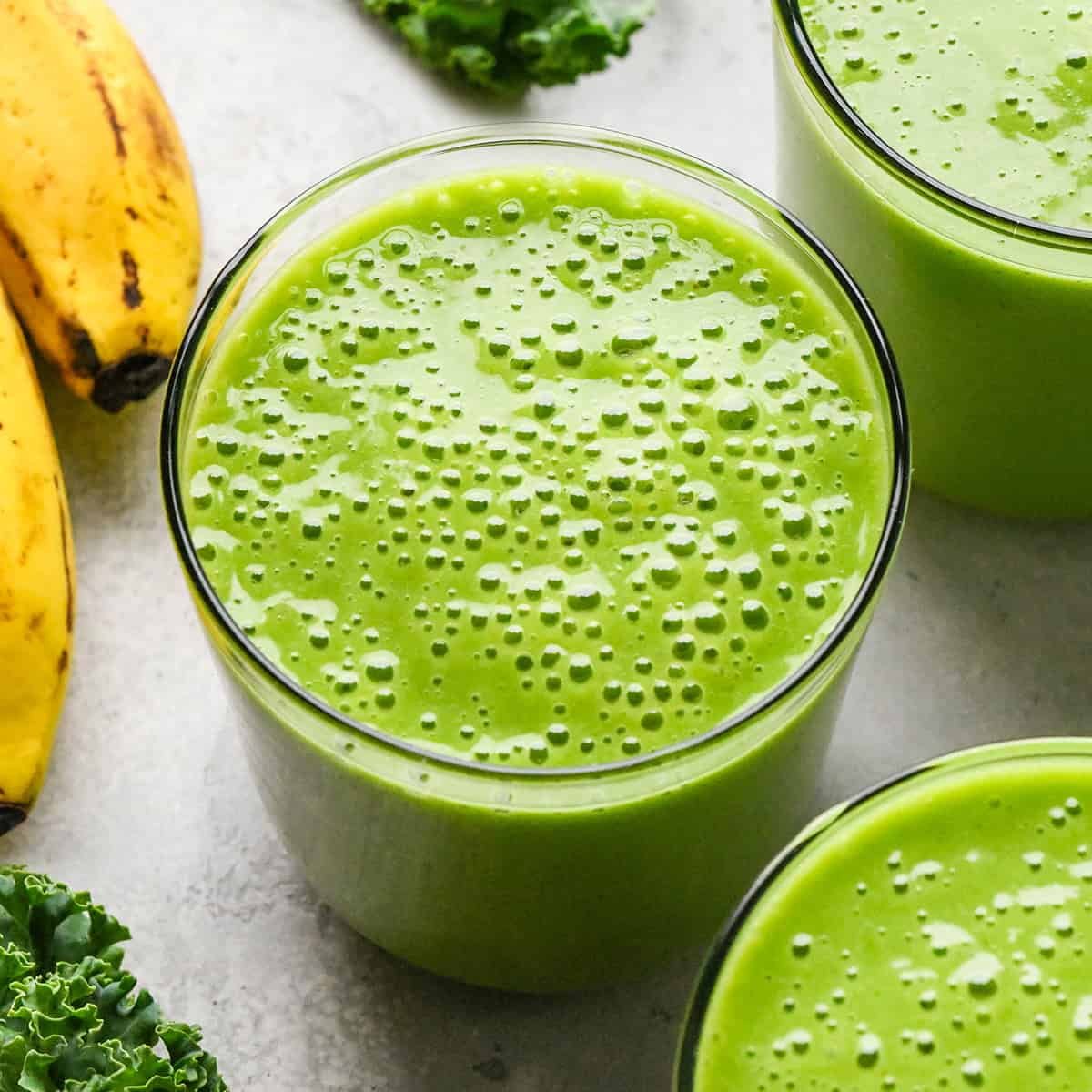
Easy Kale Fruit Smoothie for a Fresh, Healthy Breakfast
Ingredients
Method
- Put ingredients into the container of a Vitamix blender in the order listed.
- Start blending on low speed and quickly increase to high.
- Blend on high speed for 30 to 50 seconds until mixture is smooth. (Note: blend time depends heavily on if your ingredients are frozen. Frozen ingredients will have longer blend time).
- Pour into 2 or 4 glasses and enjoy.
Notes
Almond Milk: Any milk – dairy or nondairy – works well in this recipe. Coconut milk, whole milk, etc.
Frozen Banana: A frozen banana adds creaminess and keeps the smoothie nice and thick.
Frozen Fruit: Choose your favorite fruit. If you want the smoothie to be green then choose a light colored fruit like pineapple or mango. Other options include strawberries, mixed berries, grapefruit, oranges, etc.
Kale: Frozen kale makes the smoothie thick without needing to add ice. You can use fresh or frozen with great results.
Kale Preparation: Use the kale leaves and remove the stems before blending.
Optional Add-Ins: Protein powder, Greek yogurt, honey, chia seeds, etc. can be added.
Extra Protein: Add a scoop of protein powder, chia seeds, or up to ¼ cup Greek yogurt.
Spinach Substitute: Spinach can be used instead of kale if preferred.
Smoothie Consistency: Frozen fruit creates a thicker smoothie. Fresh fruit produces a thinner texture.
Blending Tip: Add the liquid first to help the ingredients blend smoothly.
Serving: Pour into 2 to 4 glasses and serve immediately.
Storage and Freezing: Drinking this kale fruit smoothie immediately is recommended. However, it can be frozen in a glass jar for up to 1 month. Leave room at the top of the jar for the smoothie to expand as it freezes.
Nutrition: Each serving contains approximately 88 calories, 20 g carbohydrates, 2 g protein, 1 g fat, 0.1 g saturated fat, 1 g polyunsaturated fat, 0.4 g monounsaturated fat, 88 mg sodium, 358 mg potassium, 4 g fiber, 11 g sugar, 1095 IU vitamin A, 57 mg vitamin C, 116 mg calcium and 1 mg iron.
Nutrition information is automatically calculated and should only be used as an approximation.
Source Time Discrepancy: The recipe card lists 5 minutes of preparation time but 2 minutes of total time. Both values are preserved as published.
This Kale Fruit Smoothie is a thick, creamy green smoothie made with frozen fruit, banana, kale, and almond milk. With just four simple ingredients and five minutes of preparation, it’s an easy way to enjoy fruit and leafy greens together in one refreshing drink.
The frozen banana gives the smoothie a naturally creamy texture, while pineapple, mango, strawberries, or other frozen fruits help balance the earthy taste of kale. You can keep it simple with the basic recipe or customize it with Greek yogurt, chia seeds, or protein powder for a more substantial breakfast or snack.
The supplied recipe lists 5 minutes of preparation but 2 minutes of total time. For practical planning, allow approximately 5 minutes. The published 2-minute total is retained in the recipe card notes for transparency.
Why You’ll Love This Kale Fruit Smoothie
- Only four ingredients: Almond milk, frozen fruit, frozen banana, and kale are all you need for the basic smoothie.
- No cooking required: Everything goes straight into the blender, making preparation quick and simple.
- Naturally creamy: Frozen banana creates a thick consistency without requiring ice or yogurt.
- Easy to customize: Choose different fruit combinations or add protein powder, Greek yogurt, or chia seeds.
- A convenient way to use kale: Blending kale with sweet fruit makes it easier to incorporate leafy greens into breakfast or snacks.
- Dairy-free base recipe: Unsweetened almond milk keeps the original four-ingredient smoothie dairy-free, while other milk options can be used if preferred.
Ingredients You’ll Need
This easy kale smoothie relies on frozen fruit for sweetness and texture, kale for its leafy green base, and almond milk to bring everything together.
Main Ingredients
- ½ cup almond milk
- 1 cup frozen fruit, such as pineapple, mango, or strawberries
- 1 frozen banana
- 1 cup kale, fresh or frozen
Optional Add-Ins
- 1 tablespoon protein powder
- ¼ cup Greek yogurt
- 1 tablespoon chia seeds
The optional ingredients are not included in the original four-ingredient recipe or its supplied nutritional estimate.
What Each Ingredient Does
Almond milk: Provides the liquid needed to blend the frozen ingredients. Its mild flavor works well with fruit and kale without overpowering the smoothie.
Frozen fruit: Adds sweetness, flavor, and a thick texture. Pineapple and mango complement kale particularly well, while strawberries create a fruitier flavor and may change the finished color.
Frozen banana: Gives the smoothie body and natural creaminess. Because frozen banana blends into a smooth texture, there’s no need to add ice for thickness.
Kale: Adds leafy greens, fiber, and nutrients. Remove the tough stems before blending so the finished smoothie is smoother and easier to drink.
Protein powder: An optional addition that can increase the protein content. The amount depends on the specific product.
Greek yogurt: Adds creaminess and protein while introducing a slightly tangy flavor.
Chia seeds: Contribute fiber and some additional nutrients. They can also thicken the smoothie as they absorb liquid.
How to Make a Kale Fruit Smoothie
This recipe is straightforward, but the order of ingredients matters. Adding the almond milk first allows the blender to process the frozen fruit and leafy greens more efficiently.
Step 1: Prepare the Kale
Wash the fresh kale thoroughly and remove the tough stems.
Use the leafy portions for the smoothie.
If using frozen kale, make sure it is suitable for smoothies and has been properly prepared before freezing.
Removing thick stems helps reduce fibrous pieces in the finished drink.
Step 2: Add the Almond Milk
Pour ½ cup almond milk into the blender container.
Adding liquid first helps the blender blades move freely when the frozen ingredients are added.
You can use another type of milk if preferred, but the flavor and nutritional profile will change.
Step 3: Add the Frozen Fruit
Add 1 cup of your preferred frozen fruit.
Pineapple or mango produces a brighter green smoothie when combined with kale, while strawberries or mixed berries create a darker or less distinctly green color.
Choose the fruit based on your preferred sweetness and flavor.
Step 4: Add the Frozen Banana
Place one frozen banana into the blender.
For easier blending, freeze peeled bananas in smaller pieces rather than as large, solid portions.
Frozen banana helps create the thick, creamy texture that makes this smoothie satisfying without needing ice.
Step 5: Add the Kale
Add 1 cup prepared kale leaves.
If using fresh kale, loosely place the leaves into the blender without forcing them down.
You can also use frozen kale for an even colder, thicker smoothie.
Step 6: Blend Until Smooth
Secure the blender lid.
Start on low speed, then quickly increase to high.
Blend for approximately 30–50 seconds, or until the fruit and kale are completely blended and the mixture is smooth.
Frozen ingredients may require slightly longer blending depending on the blender.
If the mixture doesn’t circulate properly, stop the blender and reposition the ingredients safely before continuing.
Step 7: Serve Immediately
Pour the kale fruit smoothie into two glasses.
You can divide it into four smaller portions if serving alongside other breakfast foods, but the supplied nutrition information is based on two servings.
Enjoy immediately for the best cold, creamy texture.
Best Fruits to Blend With Kale
Different fruits can change the sweetness, color, and overall character of a kale smoothie.
Pineapple
Pineapple provides a bright, tropical flavor that balances kale’s earthy notes. Its lighter color also helps maintain a green appearance.
Mango
Mango creates a sweet, tropical smoothie with a naturally creamy texture. It pairs well with frozen banana.
Strawberries
Strawberries bring a berry flavor and mild tartness. They can change the green color to a darker, more muted shade.
Mixed Berries
Mixed berries give the smoothie a deeper fruit flavor, although their dark pigments can make the smoothie brownish-purple rather than green.
Other options mentioned in the supplied recipe include grapefruit and oranges. These can produce a thinner or more tart smoothie depending on how they’re prepared, so the finished consistency may require adjustment.
How to Make a Thick and Creamy Kale Smoothie
The main secret to a thick kale fruit smoothie is using frozen ingredients rather than adding extra ice.
Use Frozen Banana
Frozen banana makes the smoothie creamy while contributing sweetness.
A room-temperature banana will still blend well but produces a thinner result.
Choose Frozen Fruit
Frozen pineapple, mango, strawberries, or mixed berries help maintain a cold, thick texture.
Using fresh fruit instead generally creates a thinner smoothie.
Try Frozen Kale
Frozen kale can make the smoothie colder without adding ice.
It also allows you to keep pre-portioned greens available in the freezer.
Measure the Almond Milk
Start with the recommended ½ cup almond milk.
Too much liquid can make the smoothie runny, particularly when using fresh fruit instead of frozen fruit.
Add Greek Yogurt for Extra Creaminess
If desired, add up to ¼ cup Greek yogurt.
This creates a creamier texture and adds some protein, although the smoothie will no longer be dairy-free unless you use a dairy-free alternative.
Tips for the Best Kale Fruit Smoothie
Remove Tough Kale Stems
Kale stems can be fibrous and difficult to blend completely.
Using the leaves creates a smoother texture, particularly in smaller blenders.
Add the Liquid First
Pour almond milk into the blender before adding frozen fruit and greens.
This helps the blades process dense frozen ingredients more efficiently.
Start Blending on Low Speed
Starting slowly and gradually increasing the speed helps the ingredients begin circulating before the blender reaches full power.
Use Sweet Fruit to Balance the Kale
Ripe banana, pineapple, and mango provide natural sweetness that complements kale’s earthy flavor.
If using tart berries or citrus fruit, the smoothie may taste less sweet.
Blend Long Enough to Break Down the Greens
Small pieces of kale can remain if blending stops too early.
Continue until the mixture is smooth and no large leafy pieces are visible.
Serve While Cold
The smoothie becomes thinner as frozen ingredients warm.
Serve it immediately after blending for the most consistent texture.
Common Mistakes to Avoid
Mistake: Leaving the Kale Stems Attached
Thick stems can create unpleasant fibrous pieces.
Remove the tough stems and use the leaves for a smoother drink.
Mistake: Adding Too Much Almond Milk
More liquid can dilute the fruit flavor and reduce thickness.
Start with the specified amount and increase only when necessary for blending.
Mistake: Using All Fresh Ingredients
Fresh fruit and kale can create a good smoothie, but it will usually be thinner than one made with frozen ingredients.
Use frozen banana and frozen fruit when you want the thickest consistency.
Mistake: Not Blending Thoroughly
Kale requires enough blending to break down the leaves.
A high-powered blender produces a smoother result, but sufficient blending time is still important.
Mistake: Adding Too Many Extras
Protein powder, chia seeds, and yogurt can change the texture significantly.
Add optional ingredients gradually rather than combining several large additions at once.
Troubleshooting Kale Smoothies
Why Does My Kale Smoothie Taste Bitter?
Kale can have a slightly earthy or bitter flavor, especially when mature leaves or stems are used.
Remove tough stems and use naturally sweet fruit such as pineapple, mango, or ripe banana to balance the taste.
Why Is My Kale Smoothie Grainy?
The kale may not have been blended thoroughly, or the blender may be struggling with large frozen ingredients.
Blend longer and make sure the kale stems are removed.
Why Is My Smoothie Too Thin?
Fresh fruit, thawed ingredients, or excess almond milk can create a thin consistency.
Use frozen fruit and frozen banana to thicken the mixture naturally.
Why Is My Smoothie Too Thick to Blend?
Frozen ingredients may prevent the blender from circulating the mixture.
Stop the blender and add a small splash of milk if necessary. Resume blending once the ingredients can move freely.
Why Did My Smoothie Turn Brown?
Combining green kale with red or purple fruits such as strawberries and blueberries can create a muted brown or purple color.
The color change is normal and doesn’t necessarily indicate a problem with the smoothie.
For a brighter green appearance, use pineapple or mango.
Easy Ingredient Substitutions
| Original Ingredient | Alternative | What Changes |
|---|---|---|
| Almond milk | Coconut milk | Different flavor and potentially richer texture |
| Almond milk | Whole milk | Adds dairy and changes the nutritional profile |
| Frozen banana | Fresh banana | Thinner, less chilled smoothie |
| Frozen fruit | Fresh fruit | Softer texture and less thickness |
| Fresh kale | Frozen kale | Colder smoothie and convenient preparation |
| Kale | Spinach | Milder green flavor |
| Pineapple or mango | Strawberries or mixed berries | Different sweetness and a darker color |
If using coconut milk, choose a consistency suitable for drinking or blending. Full-fat canned coconut milk behaves differently from carton coconut milk.
Kale Smoothie Variations
Tropical Kale Smoothie
Use frozen pineapple or mango as the fruit.
These fruits bring tropical sweetness and help maintain a vibrant green color.
Kale and Berry Smoothie
Use frozen strawberries or mixed berries instead of tropical fruit.
The flavor becomes more berry-forward, and the color may shift toward purple or brown.
Kale Banana Protein Smoothie
Add a scoop of protein powder or the supplied optional 1 tablespoon, depending on your protein goals and the product instructions.
Protein powder may increase thickness and can change the taste.
Kale Smoothie With Greek Yogurt
Add ¼ cup Greek yogurt for a creamier, slightly tangy smoothie.
Choose plain or flavored yogurt based on how sweet you want the finished drink.
Kale Chia Seed Smoothie
Blend in 1 tablespoon chia seeds.
Chia seeds contribute fiber and absorb moisture, so the smoothie may thicken as it sits.
Spinach Fruit Smoothie
Replace the kale with spinach.
Spinach generally has a milder flavor and blends easily with frozen fruit and banana.
What to Serve With Kale Fruit Smoothies
A kale fruit smoothie can be enjoyed on its own as a refreshing snack, or paired with other foods for a more substantial breakfast.
With homemade granola: Serve the smoothie alongside crunchy granola or pour it into a bowl and add granola as a topping if the consistency is thick enough.
With peanut butter protein balls: Pair a glass with a few homemade energy balls for a convenient breakfast or snack.
With toast: Whole-grain toast, nut butter, or eggs can make the meal more filling.
With fresh fruit: Serve smaller smoothie portions alongside sliced fruit for a simple breakfast spread.
The basic smoothie is relatively light, with approximately 88 calories and 2 grams of protein per supplied serving, so combining it with other foods may be useful when serving it as a full meal.
How to Store Kale Fruit Smoothies
Refrigerator Storage
This smoothie is best enjoyed immediately after blending.
Because the mixture contains fresh produce, keep any leftovers refrigerated promptly in a clean, airtight container.
The smoothie may separate or become thinner while stored. Stir or reblend before serving.
For the best texture and flavor, consume refrigerated leftovers as soon as practical.
Can You Freeze a Kale Fruit Smoothie?
Yes. According to the supplied recipe, the smoothie can be frozen in a suitable glass jar for up to 1 month.
Use a freezer-safe jar and leave space at the top for expansion.
Do not fill the jar completely, since the smoothie will expand as it freezes.
Thaw slowly in the refrigerator before serving and reblend if needed.
The thawed smoothie may be less thick and creamy than the freshly blended version.
Make-Ahead Smoothie Tips
For quick morning preparation, you can prepare the fruit and kale ahead of time.
Wash the kale, remove the stems, and divide the leaves into measured portions.
Peel and cut the banana before freezing.
Portion the frozen fruit and banana together in freezer-safe bags or containers.
When you’re ready to make the smoothie, add the almond milk first, followed by the frozen ingredients.
This approach allows you to prepare a fresh smoothie quickly without having to wash and measure everything each morning.
Frequently Asked Questions
Is Kale Good in Fruit Smoothies?
Yes. Kale blends well with naturally sweet fruits such as banana, pineapple, and mango. These fruits help balance kale’s earthy flavor while creating a refreshing green smoothie.
Can You Put Raw Kale in a Smoothie?
Yes. Fresh raw kale can be used. Wash it thoroughly and remove the tough stems before blending.
Can I Use Frozen Kale in a Smoothie?
Yes. Frozen kale works well and helps make the smoothie colder and thicker. Use kale that has been properly prepared and stored before freezing.
How Do You Make a Kale Smoothie Taste Better?
Use sweet frozen fruit such as pineapple or mango and a ripe banana. Removing the tough stems also helps improve the texture.
Can I Make a Kale Smoothie Without Banana?
Yes, but banana contributes sweetness and creaminess. If you omit it, the smoothie will have a different texture, and you may need to adjust the fruit and liquid proportions.
Can I Use Spinach Instead of Kale?
Yes. Spinach is a suitable substitute and generally has a milder flavor than kale.
How Do You Make a Kale Smoothie Thicker?
Use frozen banana, frozen fruit, and frozen kale. Avoid adding more almond milk than needed for blending.
Can I Add Protein Powder to a Kale Smoothie?
Yes. Protein powder can be blended into the recipe. The supplied optional add-in is 1 tablespoon, while a full scoop may be used for a higher-protein variation depending on the product.
Is This Kale Fruit Smoothie Dairy-Free?
Yes, the four-ingredient base recipe is dairy-free when made with almond milk. Adding dairy Greek yogurt or dairy-based protein powder would change that.
Can You Freeze Kale Fruit Smoothies?
Yes. Store the smoothie in a freezer-safe container for up to 1 month, leaving room for expansion. Thaw in the refrigerator and reblend if necessary.